Choosing Dog Food for Your Pomeranian
Pomeranians are tiny, and labels are loud. We compared published label data from several brands so you can read an ingredient list, calorie count and AAFCO statement with confidence.
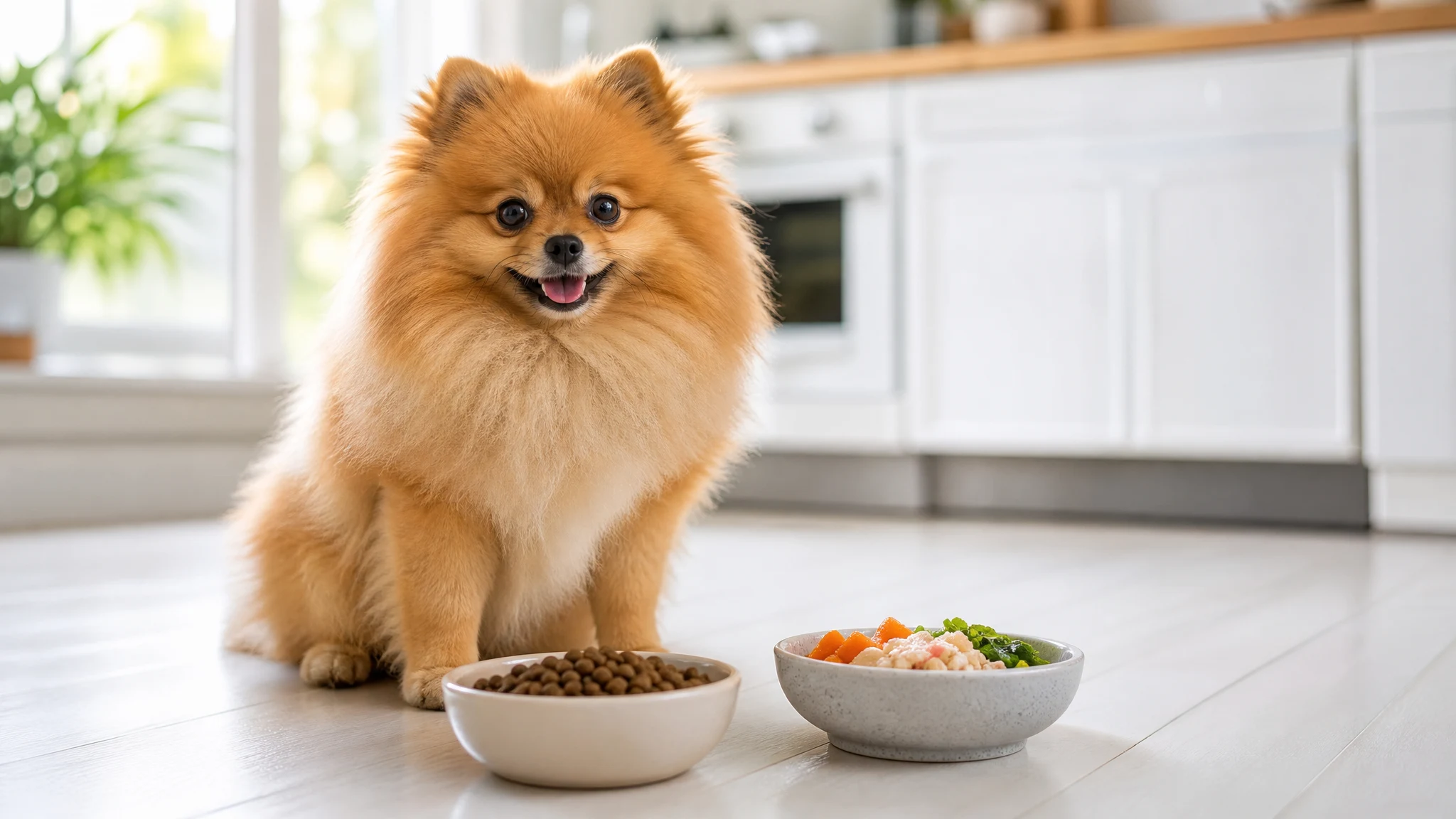
Foods for Pomeranians, compared by label
Protein and fat as each brand publishes them: guaranteed minimums from the label (as fed), or the dry-matter averages some brands publish instead, marked as such. We compare labels; we do not run feeding trials. Your veterinarian should choose the food for a dog with a health condition.
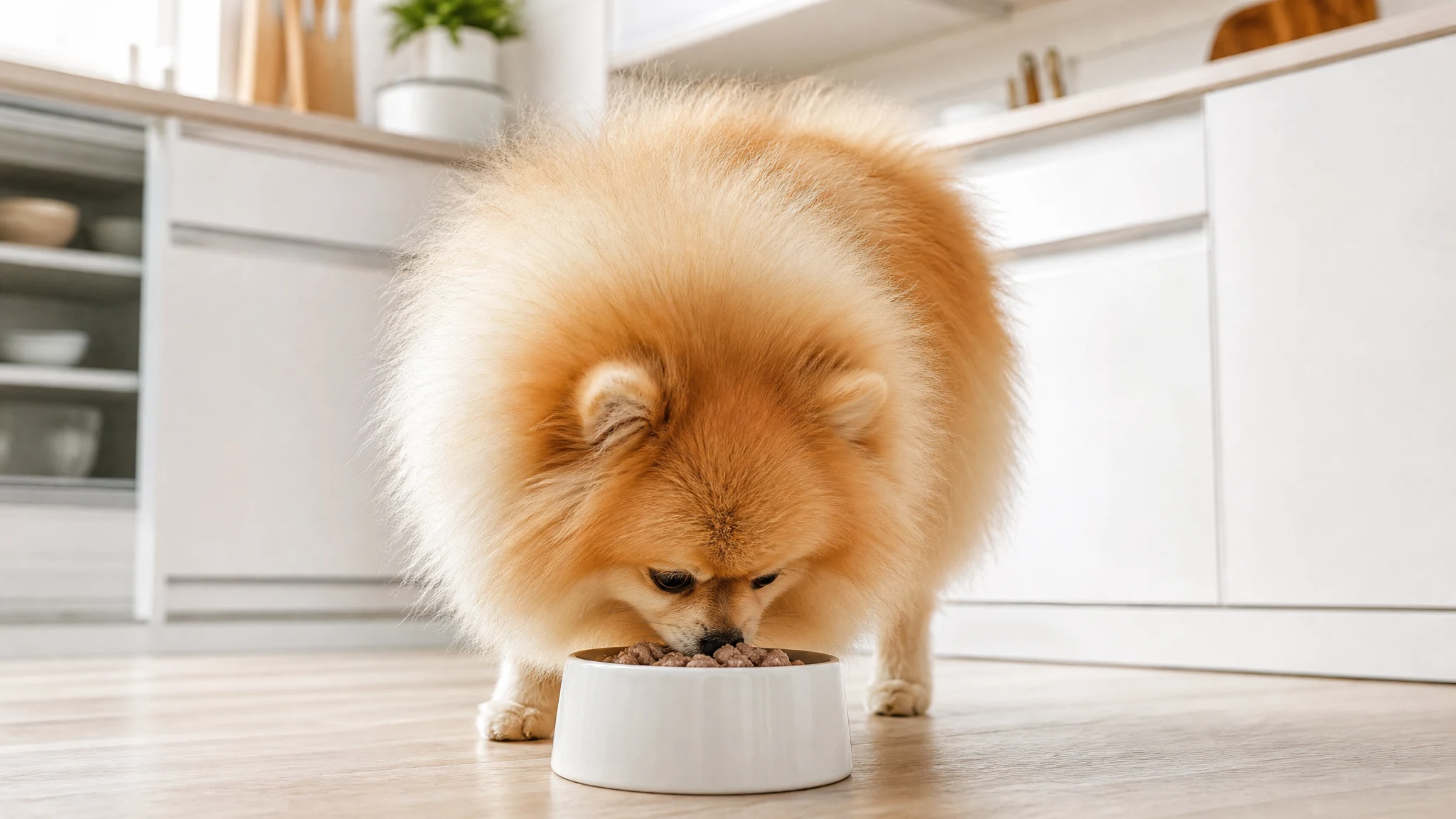
| Food | Form | Life stage | Protein / fat | Calories |
|---|---|---|---|---|
| Royal Canin Breed Health Nutrition Pomeranian Adult Dry Dog Food | dry | adult (maintenance) | 24.0% / 14.0% | 352 kcal ME per cup, as fed (calculated) |
| Royal Canin Size Health Nutrition X-Small Adult Dry Dog Food | dry | adult, 10 months to 8 years | 22.0% / 16.0% | 369 kcal ME per cup, as fed (calculated) |
| Royal Canin Small Puppy Dry Dog Food (formerly Mini Puppy; Size Health Nutrition Small Breed Dry Puppy Food) | dry | puppy, up to 10 months (expected adult weight 9-22 lbs) | 29.0% / 18.0% | 349 kcal ME per cup, as fed (calculated) |
| Hill's Science Diet Adult Small & Mini Chicken & Brown Rice Recipe Dog Food | dry | adult (maintenance) | not published | 357 kcal per cup (3699 kcal/kg) |
| Hill's Science Diet Puppy Small & Mini Chicken & Brown Rice Recipe Dog Food | dry | puppy (growth, also gestating or lactating females) | not published | 418 kcal per cup (3780 kcal/kg) |
| Hill's Science Diet Adult 7+ Small & Mini Chicken & Brown Rice Recipe Dry Dog Food | dry | senior (adult 7+) | not published | 359 kcal per cup (3,619 kcal/kg) |
| Hill's Science Diet Adult 7+ Small & Mini Chicken & Barley Entree Dog Food (5.8 oz can) | wet | senior (adult 7+) | not published | 174 kcal per 5.8 oz can (1065 kcal/kg); this is per can, not per cup |
| VICTOR Hi-Pro Plus Small Breed Adult | dry | all life stages (page text: puppy through adulthood) | 30.0% / 14.0% | 360 kcal per cup (3503 kcal/kg) |
| VICTOR Hi-Pro Plus Small & Medium Breed Puppy | dry | all life stages (puppy through adulthood) | 30.0% / 18.0% | 383 kcal per cup (3,730 kcal/kg) |
| Freshpet Small Dog Bite Size Chicken Recipe | fresh | all life stages except growth of large size dogs | 16% / 12% | 267 kcal per cup (calculated); 883 kcal per lb |
| Freshpet Vital Small Breed: Chicken Recipe with Carrots, Sweet Potatoes & Cranberries | fresh | all life stages | 16% / 12% | 294 kcal per cup (979 kcal per lb; 2,159 kcal/kg) |
| Nom Nom Chicken Cuisine | fresh (frozen) | all life stages, including growth of large size dogs | 6.5% / 4.5% | 244 kcal per cup (calculated; 1 cup = 219 g) |
| JustFoodForDogs Chicken & White Rice Recipe (Chicken & Rice 18 oz, 14 Pack) | fresh | all life stages, including growth of large size dogs | 8.0% / 3.0% | unknown (page gives 1530 kcal ME/kg, 43 kcal ME/oz, 774 kcal ME per 18 oz pack; no per-cup figure) |
Pomeranian Food Guides
Each guide breaks down life stage, ingredients and calories so you can compare foods for your own small dog.
Best foods
Foods compared by label data: AAFCO statement, protein, fat and calories.
Feeding
How much and how often to feed, by age and weight.
- Royal Canin Dog Food for a Pomeranian: Feeding Amounts by Weight
- Best Puppy Food for a Pomeranian: Switching From Puppy to Adult Formula
- Best Food for a Pomeranian Puppy: How Much to Feed by Age
- Dog Food for a Pomeranian: Feeding Amounts and Schedule
- Pomeranian Dog Food: How Much and How Often to Feed
Nutrition and health
The diet questions that matter for this breed.
- Royal Canin Dog Food for a Pomeranian: What's Actually in the Label
- Is Royal Canin's Pomeranian Adult Formula Worth the Premium Price?
- Is Royal Canin's Pomeranian Formula a Good Nutritional Fit?
- Best Dog Food for a Pomeranian: What to Look For on the Label
- Best Food for a Pomeranian: What Makes a Food Good for This Breed
What matters when feeding Pomeranians
Breed facts that change what and how much to feed, with sources.
| Adult weight | 3-7 pounds source |
| Size | toy source |
| Life expectancy | 12-16 years source |
| Switch to adult food | Feed adult food for dogs at least 1 year old source |
| Diet-related health topics | PetMD recommends a high-quality AAFCO-compliant food and frequent meals because of the breed's higher than average risk of hypoglycemia. Puppies get multiple meals a day. Adults and seniors get two to three meals a day. | The breed-specific page says most puppy hypoglycemia cases come from insufficient or low-quality… source |
How we compare foods
We read each food's published label: the AAFCO nutritional adequacy statement, the guaranteed analysis, the calorie statement and the ingredient list, from the brand's own page. We note which life stage each food is formulated for and whether it covers large-breed growth. We do not test foods on dogs, accept payment from brands or earn commission on these foods. More on our method.
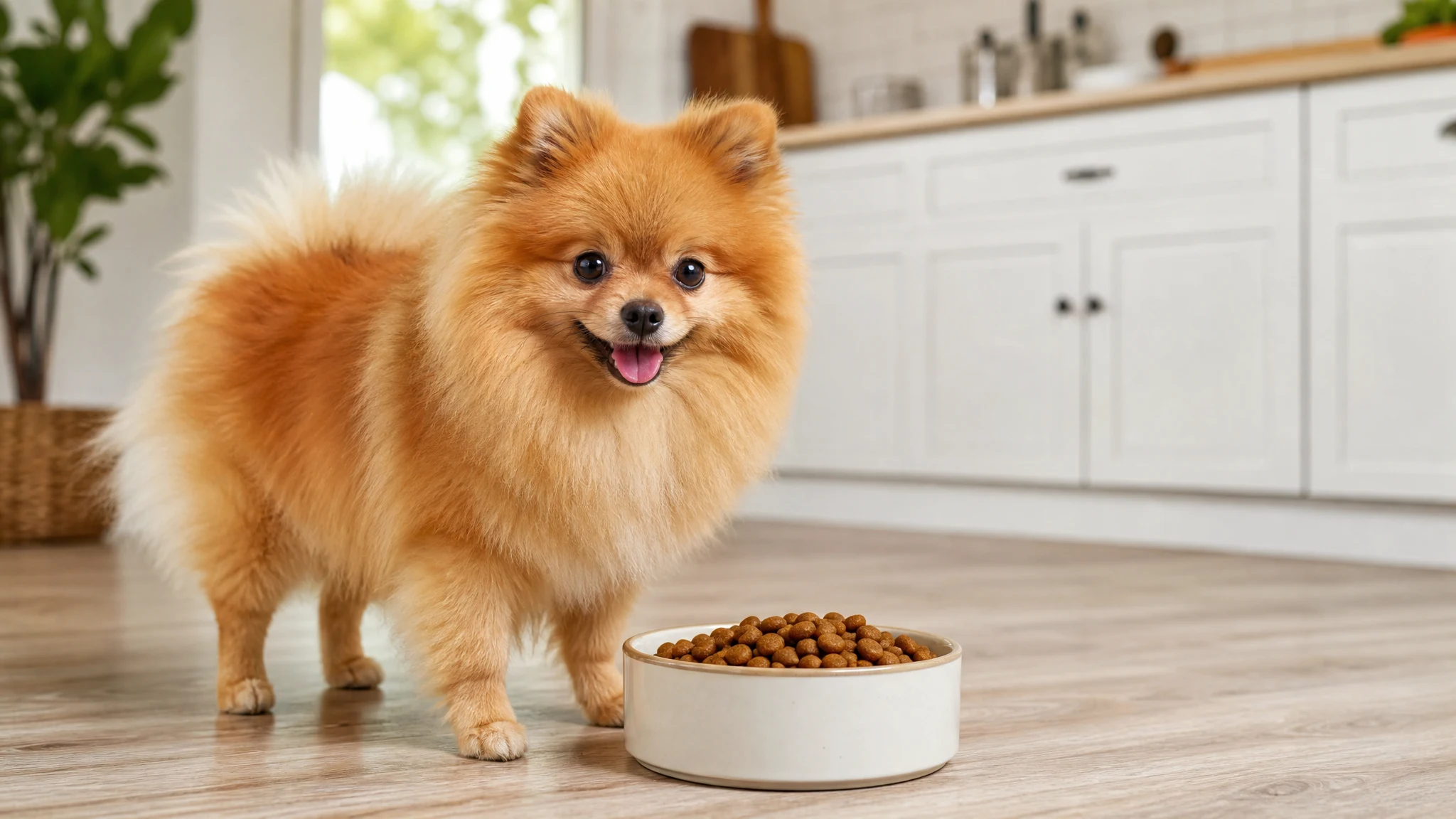
Pomeranian Feeding Questions Answered
How many times a day should a Pomeranian eat?
PetMD says puppies get multiple meals a day, and adults and seniors get two to three, partly because the breed has a higher than average risk of hypoglycemia (low blood sugar). Your veterinarian can set a schedule that fits your dog's age and weight.
When should I switch from puppy to adult food?
PetMD's breed page says to feed adult food to dogs at least 1 year old. Royal Canin lists its Small Puppy formula up to 10 months for dogs expected to reach 9 to 22 pounds, above a typical Pomeranian's size, so ask your vet which line fits.
Does my Pomeranian need a large-breed puppy food?
PetMD lists adult Pomeranians at 3 to 7 pounds, far below the 70 pound adult size AAFCO uses for large dogs, so large-breed puppy calcium limits are not a concern for this breed. Still read the AAFCO statement on any puppy food, and confirm the choice with your veterinarian.
Is grain-free food safer for a Pomeranian?
The FDA's investigation page on diets and canine dilated cardiomyopathy (DCM) was last updated December 23, 2022. The agency says it will not post more until there is meaningful new scientific information. Whether grain-free suits your dog is a question for your veterinarian.
How much should I feed, and do treats count?
Treat label amounts as a starting point, such as the 1/4 cup per day Royal Canin lists for a 2.2 pound dog at low activity. PetMD advises that treats, chews and toppers count toward daily calories to avoid obesity. Ask your veterinarian to adjust the amount.
General nutrition information compiled from product labels and published sources, not veterinary advice. Your veterinarian is the right person to choose a diet for your dog, especially one with a health condition.