Best Food for a Pomeranian Puppy: How Much to Feed by Age
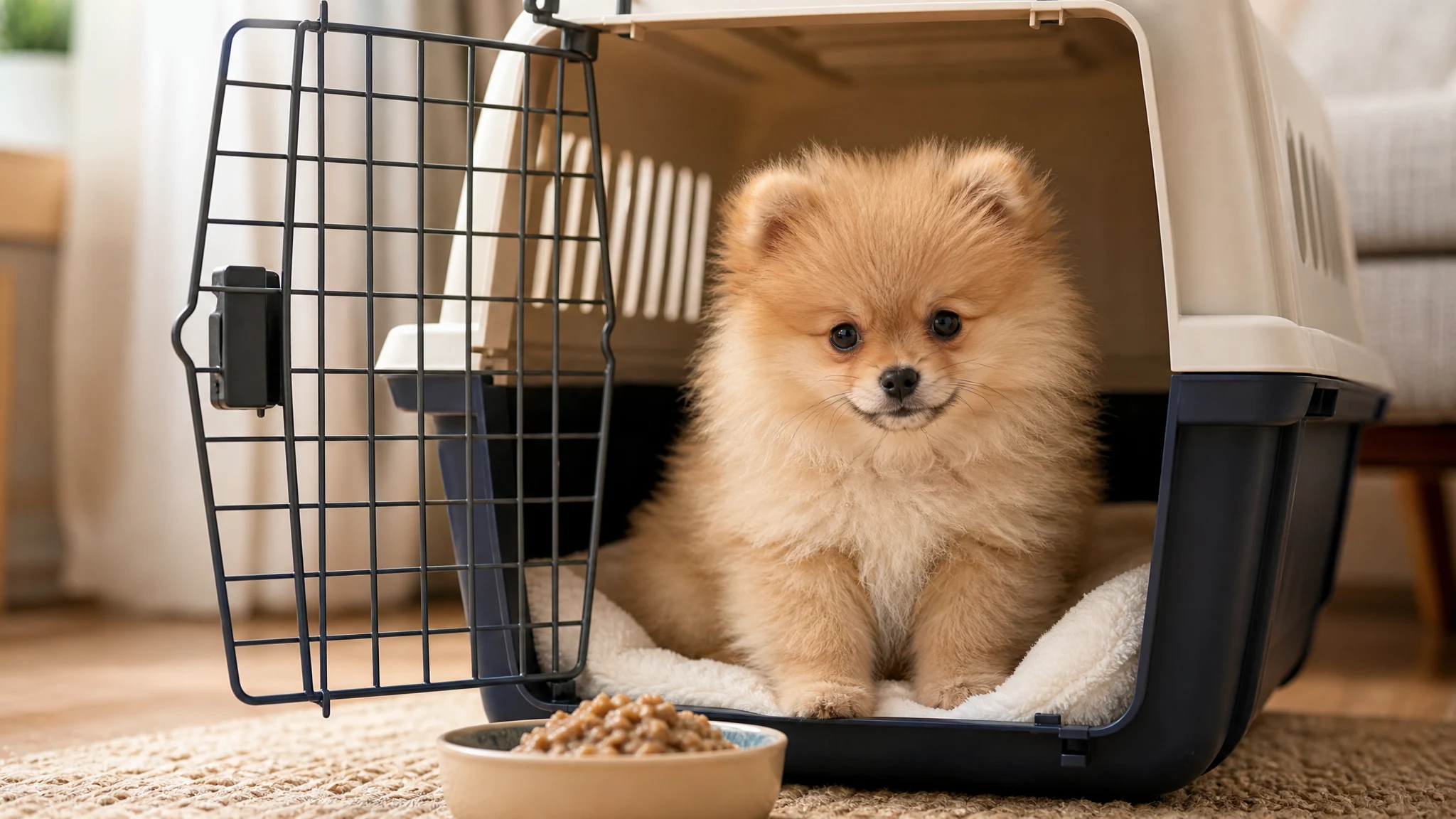
General nutrition information compiled from product labels and published sources, not veterinary advice. Your veterinarian is the right person to choose a diet for your dog, especially one with a health condition.
A Pomeranian puppy is tiny, and small mistakes in feeding show up fast. PetMD lists the breed as a toy at about 3 to 7 pounds as an adult. It also notes a higher than average risk of low blood sugar, called hypoglycemia, especially in puppies.
This guide walks you through choosing the best food for a Pomeranian puppy and setting up a feeding routine. We compared label data from brand pages. We did not run feeding trials or taste tests, so treat everything here as a starting point to discuss with your veterinarian.
What You Need
- A food labeled for puppies or for all life stages, with an AAFCO statement on the bag
- The feeding guide from the brand's own product page or the bag
- A kitchen scale or a proper measuring cup (scoops and coffee mugs vary a lot)
- Your puppy's current weight, checked on the same scale each time
- A small notebook or phone note to log meals, treats and weight
- A veterinarian you can call with questions
Step 1: Check the AAFCO Statement First
Look for a sentence saying the food meets AAFCO Dog Food Nutrient Profiles for growth, or for all life stages. A plain adult maintenance statement is not meant for a growing puppy.
You may see a phrase about growth of large size dogs (70 pounds or more as an adult). A Pomeranian is far below that size. PetMD gives the adult weight as 3 to 7 pounds, so the large-breed puppy calcium issue does not apply to this breed. An "all life stages except large size growth" food is fine on this point.
Step 2: Pick a Size-Appropriate Puppy Formula
Small-breed formulas are built for small jaws and higher calorie needs per pound. Here is what the brands' own pages say about a few options. Check each page for current details, since labels change.
| Food | Label notes | Calories |
|---|---|---|
| Hill's Science Diet Puppy Small & Mini Chicken & Brown Rice | AAFCO feeding tests for growth. First ingredients: chicken, whole grain oats, brown rice, chicken meal, chicken fat. The page lists dry matter averages (protein 28.9%, fat 19.7%), not label minimums. | 418 kcal per cup |
| Royal Canin Small Puppy | Meets AAFCO growth profiles, including large size dogs. Minimum protein 29%, minimum fat 18%. Made for puppies expected to reach 9 to 22 pounds as adults. | 349 kcal per cup |
| VICTOR Hi-Pro Plus Small & Medium Breed Puppy | AAFCO all life stages, except growth of large size dogs. Minimum protein 30%, minimum fat 18%. First ingredients: beef, chicken, beef meal, chicken meal, whole grain sorghum. | 383 kcal per cup |
Two cautions. First, Hill's reports dry matter averages, while Royal Canin and VICTOR report minimums. Those numbers are not directly comparable. Second, a Pomeranian's expected adult weight is below the 9 to 22 pound range Royal Canin states for its Small Puppy food. Royal Canin's X-Small line is made for dogs up to 8 pounds as adults. Ask your vet which fits your puppy.
Fresh and frozen foods exist too. Freshpet's small dog recipes state AAFCO all life stages (the Bite Size Chicken Recipe excludes large size growth). Nom Nom and JustFoodForDogs state all life stages including growth of large size dogs, but neither is a small-breed formula. Ask your vet whether those suit a Pomeranian puppy.
Step 3: Read the Ingredient List with Some Skepticism
Ingredients are listed by weight before cooking. The first five tell you the most, but they do not tell the whole story. "Chicken" includes water weight, while "chicken meal" is concentrated. Neither word makes a food better on its own.
Marketing words like "premium" or "natural" are not nutrition facts. Compare the AAFCO statement, the protein and fat figures, the calories per cup and the feeding guide instead.
Step 4: Set a Meal Schedule by Age
PetMD says puppies get multiple meals a day because of the breed's hypoglycemia risk. It says adults and seniors get two to three meals a day. The pomeranian.org breed site says most puppy hypoglycemia cases come from insufficient or low-quality food.
Those sources do not give an exact meal count for each week of age. Ask your vet how many meals to give at your puppy's age. Then divide the daily amount evenly across those meals.
PetMD also advises feeding adult food for dogs at least 1 year old. Some small-breed adult foods start earlier (Royal Canin's X-Small Adult is labeled for dogs from 10 months). Ask your vet when to switch for your puppy, and make the change gradually.
Step 5: Find the Daily Amount
Use the brand's own feeding guide, based on your puppy's weight and age. Treat it as a starting point, not a rule.
- Weigh your puppy.
- Find that weight and age on the food's feeding table.
- Measure the daily total with a scale or measuring cup.
- Split it into the number of meals your vet recommends.
One example from the label data: Hill's Puppy Small & Mini lists 3/8 cup (40 g) per day for a 2 pound dog at 4 to 9 months. A Pomeranian puppy may weigh differently, so use the table for your own puppy's weight. VICTOR's puppy page has feeding charts by age and weight in cups per day. Royal Canin's puppy page points to a feeding calculator. For a full age-by-age look, see our Pomeranian feeding chart by age.
Cup sizes differ between brands, and so do calories per cup. A cup of one food is not a cup of another. If you switch brands, re-check the guide for the new food.
Step 6: Track Weight and Adjust with Your Vet
Weigh your puppy regularly and note how they look and act. A healthy puppy is generally lively, with a body shape you can see from above. If your puppy seems lethargic, shaky or unusually sleepy, call your vet promptly.
If your puppy has a health condition, confirm all amounts with your vet before changing anything. That includes digestive trouble, a history of low blood sugar or any prescription diet. Prescription diets come only from a veterinarian.
Step 7: Count Every Treat
PetMD advises that treats, chews and toppers count toward daily calories, which helps avoid obesity. In a dog that weighs a few pounds, a few extra bites are a large share of the day. Use tiny pieces and subtract them from the meal total if your vet agrees.
Dental disease is also on PetMD's list of Pomeranian health problems, and pomeranian.org says ignored teeth problems quickly cause major trouble. Ask your vet about dental care and which chews are safe.
Tips
- Keep meals at the same times each day. A steady routine makes appetite changes easier to notice.
- Serve small portions in a shallow bowl.
- Change foods slowly, mixing the new food in with the old over several days, unless your vet says otherwise.
- Keep the bag or a photo of the label so you can check the AAFCO statement and feeding guide later.
- Write down your questions before each vet visit.
Common Mistakes to Avoid
- Feeding an adult maintenance food too early. Check that the label covers growth or all life stages.
- Guessing portions. A scoop can hold much more than the guide calls for.
- Skipping meals or leaving long gaps. PetMD ties the breed's low blood sugar risk to meal frequency.
- Choosing by a front-of-bag claim. Read the AAFCO statement and the analysis panel instead.
- Treating a feeding table as exact. Activity, age and metabolism vary.
- Adding supplements on your own. Ask your vet first. We give no supplement amounts here.
What to Expect
With a suitable puppy food, measured portions and regular meals, many owners see steady appetite, normal energy and gradual weight gain. Results differ from puppy to puppy, and no food can promise a particular outcome. No food prevents or treats a disease. Your vet decides what is right for your individual dog.
Brand pages can change, and some details (such as kibble size) are not stated on them. Check with the brand or your vet before you buy.
Sources
- PetMD: Pomeranian breed page
- pomeranian.org: Pomeranian breed information
- Hill's Pet: Science Diet Puppy Small & Mini
- Royal Canin: Small Puppy
- Royal Canin: X-Small Adult
- VICTOR: Hi-Pro Plus Small & Medium Breed Puppy
- Freshpet: Small Dog Bite Size Chicken Recipe
- Nom Nom: Chicken Cuisine
- JustFoodForDogs: Chicken & White Rice Recipe