Best Dog Food for a Pomeranian: Budget vs Premium Options
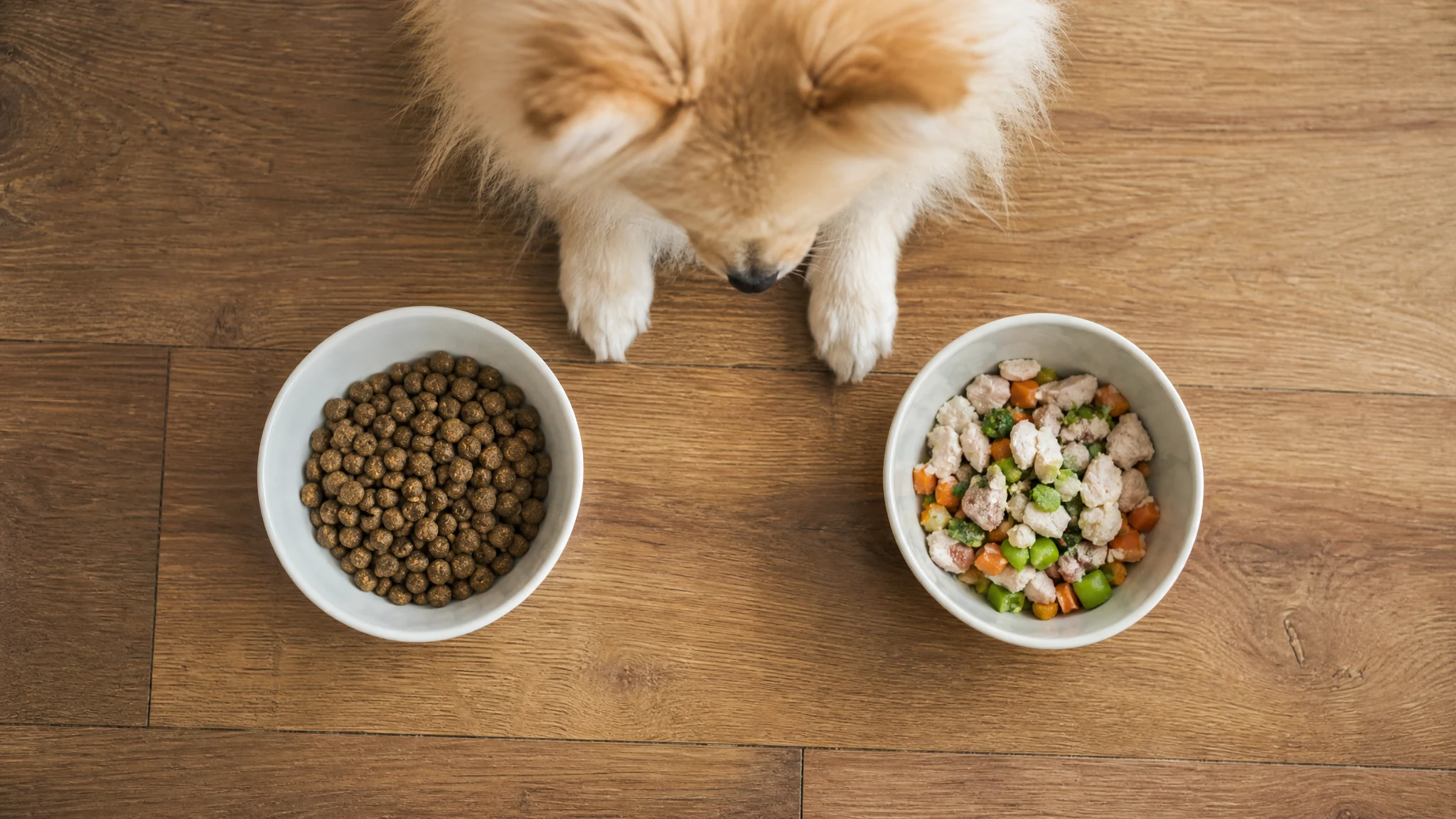
General nutrition information compiled from product labels and published sources, not veterinary advice. Your veterinarian is the right person to choose a diet for your dog, especially one with a health condition.
Finding the best dog food for Pomeranian life comes down to reading labels, not price tags. A small dog eats very little, so a bag lasts a long time. That changes how budget and premium foods compare.
This guide walks you through a simple method. You will compare foods by what is printed on the label, then work out what each one costs per day for your own dog.
A note on method: we compared label data from brand pages. We did not run feeding trials or taste tests, and we are not ranking foods by how dogs liked them.
What You Need
- Your dog's current weight, from a home scale or your veterinarian's office.
- Your dog's life stage: puppy, adult or senior.
- The bag or can of any food you are considering, or its brand product page.
- A kitchen scale or a standard measuring cup.
- A calculator and a notepad.
- The price of each food, which you check yourself with the brand. Price is not part of the label data we compared.
Why Pomeranians Need a Careful Approach
PetMD lists the Pomeranian's adult weight as about 3 to 7 pounds. That is a very small body with a fast-feeling appetite for treats and not much room for extra calories. PetMD advises that treats, chews and toppers count toward daily calories to avoid obesity.
PetMD also notes the breed has a higher than average risk of hypoglycemia (low blood sugar), especially in puppies. It recommends a high-quality food that meets AAFCO standards and frequent meals. It says puppies get multiple meals a day, and adults and seniors get two to three. A veterinarian decides what is right for an individual dog.
Step 1: Match the Food to Your Dog's Life Stage
Start with the AAFCO statement. It is the sentence on the label that says what the food is complete and balanced for.
- Maintenance: for adult dogs. PetMD says to feed adult food to dogs at least 1 year old.
- Growth: for puppies.
- All life stages: covers puppies and adults.
Many all-life-stages labels add "except for growth of large size dogs (70 lb. or more as an adult)." A Pomeranian is far below that size, so this exception does not affect your dog. It is simply wording to recognize.
Be careful with puppy foods labeled for small breeds. The Royal Canin Small Puppy page lists an expected adult weight of 9 to 22 pounds. That is above the Pomeranian range, so ask your veterinarian whether an X-Small line fits your puppy better.
Step 2: Compare Label Data Side by Side
The table below shows adult or all-life-stage foods that appear on brand pages. Figures come straight from those pages.
| Food | AAFCO basis | Protein / fat | Calories | First ingredients |
|---|---|---|---|---|
| Royal Canin Breed Health Nutrition Pomeranian Adult (dry) | Maintenance, nutrient profiles | 24% min / 14% min | 352 kcal per cup | Brewers rice, corn, chicken by-product meal, chicken fat, oat groats |
| Royal Canin Size Health Nutrition X-Small Adult (dry) | Maintenance, nutrient profiles | 22% min / 16% min | 369 kcal per cup | Brewers rice, corn, chicken by-product meal, chicken fat, corn gluten meal |
| Hill's Science Diet Adult Small & Mini Chicken & Brown Rice (dry) | Maintenance, feeding tests | 25% / 15.3% (dry matter averages, not minimums) | 357 kcal per cup | Chicken, brown rice, whole grain wheat, whole grain corn, brewers rice |
| VICTOR Hi-Pro Plus Small Breed Adult (dry) | All life stages, except large-size growth | 30% min / 14% min | 360 kcal per cup | Beef, chicken meal, beef meal, brown rice, whole grain millet |
| Freshpet Small Dog Bite Size Chicken Recipe (fresh) | All life stages, except large-size growth | 16% min / 12% min | 267 kcal per cup | Chicken, chicken liver, carrots, cranberries, eggs |
Two cautions when reading this table. First, Hill's gives dry matter averages, while the others give guaranteed minimums. Those are different measurements, so do not rank them against each other by protein alone.
Second, fresh food contains much more water than dry kibble. Its lower protein and fat percentages do not mean it has less of those nutrients per calorie. Compare fresh and dry foods by calories and AAFCO statement, not by raw percentages.
For a longer breakdown of more products, see our page on dog foods compared by label data.
Step 3: Read the Ingredient List with a Skeptical Eye
Ingredients are listed by weight, so the first five tell you the most. Look at what they are, not how they are described on the front of the bag.
- A named meat first is common, but a "meal" or "by-product meal" is also a legitimate ingredient category. The label alone does not make one better.
- Marketing terms such as "premium" or "natural" are not a nutrition measure.
- Grain-free is not automatically better. The FDA's investigation into diets and canine dilated cardiomyopathy (DCM) concerned grain-free diets high in peas, lentils or potatoes. The FDA's last public update was December 23, 2022, and it does not plan more until there is meaningful new science. If you are unsure, ask your veterinarian.
Step 4: Work Out Cost Per Day, Not Cost Per Bag
This is where budget and premium foods really separate. Use this method with prices you confirm with the brand.
- Find the daily amount on the brand's feeding guide for your dog's weight. Treat it as a starting point, not a fixed rule. VICTOR's chart, for example, lists 0.5 cup daily for a 5 pound dog.
- Divide the package price by the number of cups in the package to get cost per cup.
- Multiply cost per cup by the daily cups to get cost per day.
- Multiply by 30 for a monthly figure.
Calorie density matters here. A food with more kcal per cup needs a smaller portion. Compare kcal per cup before you compare price per cup, or a cheaper food may turn out to cost the same per day.
Step 5: Decide Between Budget and Premium
Neither price tier is automatically right. Use this checklist instead.
- Does the AAFCO statement match your dog's life stage?
- Is the kibble or piece size suitable for a tiny mouth? Brands rarely give exact sizes. Royal Canin describes smaller kibble for small jaws, and Hill's Adult 7+ lists nibble size kibble. For others, check with the brand.
- Does your cost per day fit your budget for the long term? PetMD gives a life expectancy of 12 to 16 years, so consistency matters.
- Can you feed it at a calorie level that keeps your dog lean?
Step 6: Switch Foods Slowly and Measure Portions
Mix a little of the new food into the old one and increase it gradually over about a week or more. Weigh or measure every meal. With a dog this small, a quarter cup is a big change. Royal Canin's guide, for example, lists 1/4 cup for a 2.2 pound dog at low activity.
Split the daily amount into the number of meals your veterinarian suggests. Count treats toward the daily total.
Tips
- Ask your veterinarian before changing foods in a puppy or a senior, or any dog with a medical condition.
- Senior options exist. Hill's Adult 7+ Small & Mini comes in dry (359 kcal per cup) and wet (174 kcal per 5.8 oz can).
- Use the brand's own page for the current label, since recipes can change.
- Dental disease is listed among Pomeranian health problems by PetMD. Ask your veterinarian about dental care. Food choice alone is not a substitute for it.
Common Mistakes to Avoid
- Choosing by price alone. Cost per day and life-stage fit matter more than bag price.
- Comparing different measures. Dry matter averages and guaranteed minimums are not the same thing.
- Using a large-breed or generic feeding chart. Pick a chart that starts at toy-dog weights.
- Forgetting treats. They add up fast in a 5 pound dog.
- Skipping meals for a puppy. PetMD flags the breed's hypoglycemia risk, and pomeranian.org says most puppy cases come from insufficient or low-quality food. Talk to your veterinarian about feeding schedules.
- Treating a food as medicine. No food on this list is claimed to prevent or treat any condition. Prescription diets come only from a veterinarian.
What to Expect
If you choose a complete and balanced food for the right life stage and measure portions carefully, your dog may hold a steady weight and eat on a regular schedule. Stools and energy may stay consistent too. Results vary by dog, and no food can promise a specific outcome.
If your dog seems unwell, loses interest in meals, or shows signs of low blood sugar such as weakness, call your veterinarian right away. Do not wait for a diet change to work.
Sources
- PetMD, Pomeranian breed page
- pomeranian.org, Pomeranian health and care information
- FDA Center for Veterinary Medicine, investigation into diets and canine dilated cardiomyopathy
- Royal Canin, Pomeranian Adult Dry Dog Food
- Royal Canin, X-Small Adult Dry Dog Food
- Royal Canin, Small Puppy Dry Dog Food
- Hill's Science Diet, Adult Small & Mini Chicken & Brown Rice
- Hill's Science Diet, Adult 7+ Small & Mini dry
- Hill's Science Diet, Adult 7+ Small & Mini Chicken & Barley canned
- VICTOR, Hi-Pro Plus Small Breed Adult
- Freshpet, Small Dog Bite Size Chicken Recipe