Human Foods Pomeranians Should Never Eat
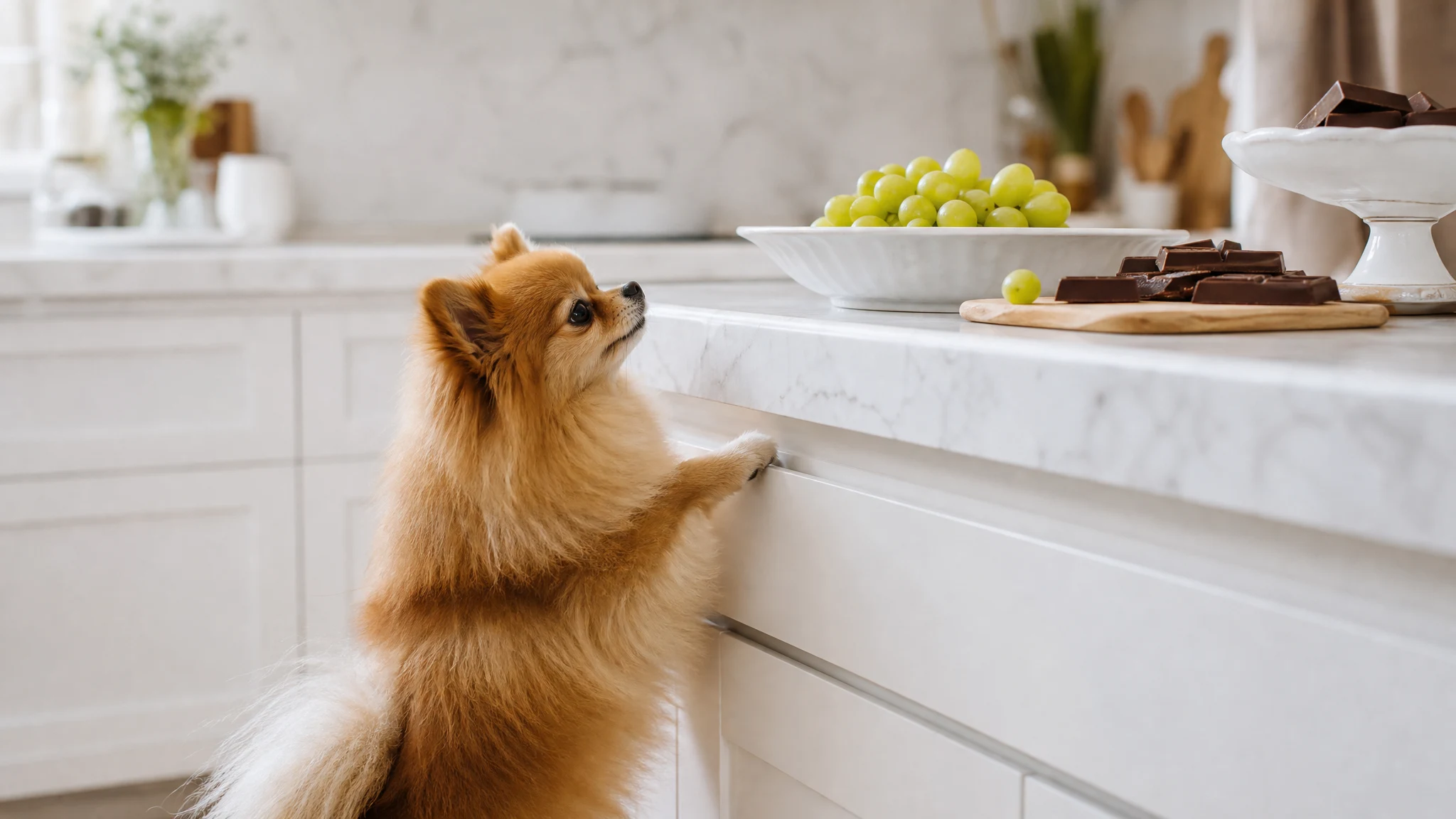
General nutrition information compiled from product labels and published sources, not veterinary advice. Your veterinarian is the right person to choose a diet for your dog, especially one with a health condition.
Many people ask what Pomeranians can not eat, and the answer is longer than most owners expect. The ASPCA Animal Poison Control Center keeps a list of foods that are toxic to dogs, and several common kitchen items are on it. This page groups the most common questions by theme, so you can find an answer quickly.
A Pomeranian is a toy breed. PetMD gives the adult weight as 3 to 7 pounds. With a body that small, even a modest bite of the wrong food can matter more than it would for a bigger dog. A veterinarian decides what is right for an individual dog.
The Basics: Human Foods Dogs Can't Eat
Which human foods can dogs not eat at all?
The ASPCA lists chocolate, grapes and raisins, xylitol, onions and garlic, macadamia nuts, and alcohol among the foods dogs should not eat. Caffeine, raw yeast dough and moldy food are also on the list. The sections below take these one at a time.
Why does the toxic list matter more for a Pomeranian?
PetMD describes the breed as 3 to 7 pounds as an adult. A small body means a small amount of a harmful food is a larger share of what the dog's system has to handle. That is why owners of toy breeds are wise to treat the list as a firm no, not a guideline.
Is it safe if my Pomeranian only ate a tiny bit?
Not necessarily. Whether a small amount causes harm depends on the food and on the dog. If your Pomeranian ate something on the toxic list, contact a veterinarian or the ASPCA Animal Poison Control Center rather than waiting to see what happens.
Sweets, Drinks and Sweeteners
Can Pomeranians eat chocolate?
No. The ASPCA lists chocolate as toxic to dogs because it contains compounds called methylxanthines. Dark chocolate and baking chocolate are generally considered more concerning than milk chocolate, but none of it is a safe treat.
What is xylitol, and why is it dangerous?
Xylitol is a sugar substitute. The ASPCA lists it as toxic to dogs. It turns up in sugar-free gum, some candy, baked goods and certain peanut butters, so read the ingredient list on anything you share.
Can Pomeranians have coffee, tea or soda?
No. Caffeine is on the ASPCA toxic list. Coffee grounds, tea bags and energy drinks should be kept out of reach, along with any soda that contains caffeine.
Is alcohol dangerous for a Pomeranian?
Yes. The ASPCA lists alcohol as toxic to dogs. This includes drinks, but also foods that contain it, such as some desserts and raw dough made with yeast. A spilled glass on the floor needs attention.
Fruits, Vegetables and Nuts
Can Pomeranians eat grapes or raisins?
No. The ASPCA lists grapes and raisins as toxic to dogs, and they can be harmful even in small amounts. Raisins hide in cereal, trail mix and baked goods, so check what you drop on the floor.
Are onions and garlic really a problem?
Yes. The ASPCA lists onions, garlic, chives and leeks as toxic to dogs. This includes cooked, raw and powdered forms, so leftover soup, gravy or seasoned meat can be a hidden source.
Can Pomeranians eat macadamia nuts?
No. Macadamia nuts are on the ASPCA toxic list. Cookies and snack mixes that contain them are just as risky as the nuts on their own.
What about avocado, walnuts and other nuts?
The ASPCA advises caution with avocado, and moldy walnuts can be a concern. Salty or heavily seasoned nuts are not a good fit for a toy breed either. Since the rules vary from nut to nut, the simplest approach is to keep nuts out of the treat routine unless your veterinarian says otherwise.
Meats, Bones and Rich Foods
Can Pomeranians eat cooked bones?
Cooked bones can splinter, and a small dog has a small throat and digestive tract. Bones are best avoided. If you want something to chew, ask your veterinarian which options suit a toy breed, especially since PetMD lists dental disease among the breed's health problems.
Is table food, such as fatty scraps or gravy, okay?
Fatty, salty and heavily seasoned scraps are not a good habit. They can upset a small dog's stomach, and they often contain onion or garlic. Treats, chews and toppers count toward daily calories, as PetMD advises, and extra calories add up quickly in a dog that weighs only a few pounds.
Can Pomeranians eat raw dough, or moldy or spoiled food?
No. The ASPCA includes raw yeast dough and moldy food among the items to keep away from dogs. Keep the trash can covered or behind a door, since a curious Pomeranian can reach more than you might think.
Safer Snacks: What Can Pomeranians Eat?
What can Pomeranians eat as an occasional treat?
Many owners offer small pieces of plain cooked chicken with no seasoning, plain carrot, or a few blueberries. Plain means no salt, oil, onion or garlic. Introduce any new food in a tiny piece and ask your veterinarian whether it suits your dog.
How many treats can a Pomeranian have?
The label on a dog food gives a feeding guide, but treats are extra. PetMD says treats, chews and toppers count toward daily calories to help avoid obesity. Ask your veterinarian how much room your own dog has for treats.
Why do Pomeranian owners worry about meal timing?
PetMD notes the breed has a higher than average risk of hypoglycemia, or low blood sugar, and recommends a high-quality AAFCO-compliant food and frequent meals. Puppies get multiple meals a day, and adults and seniors get two to three. Snacks are not a substitute for a complete meal, so a complete and balanced dog food should stay the base of the diet.
Where can I compare complete dog foods for a Pomeranian?
We compared label data for several foods, including AAFCO statements, ingredients and calories. We did not run feeding trials or taste tests. You can read the comparison in our guide to dog foods compared by label data.
Emergencies: What to Do
What should I do if my Pomeranian eats something toxic?
Contact your veterinarian or an emergency clinic right away, or call the ASPCA Animal Poison Control Center. Look up the current phone number on the ASPCA website, since it is best to confirm it directly. Have the food, the package and your dog's weight ready.
Should I make my dog vomit at home?
Do not do this unless a veterinarian or poison control specialist tells you to. The right step depends on what was eaten, and some situations make vomiting unsafe. Professional advice comes first.
Can I wait to see if symptoms appear?
It is safer not to wait. Signs can take time to show, and the earlier a professional knows what your dog ate, the more options there are. A phone call is a small cost compared with guessing.
Sources
- PetMD Pomeranian breed page (weight, hypoglycemia risk, meal frequency, treats and calories, dental disease)
The toxic food list comes from the ASPCA Animal Poison Control Center. Check the ASPCA website for the full, current list and its contact details.