Why a Pomeranian Might Need a Slow Feeder Bowl
General nutrition information compiled from product labels and published sources, not veterinary advice. Your veterinarian is the right person to choose a diet for your dog, especially one with a health condition.
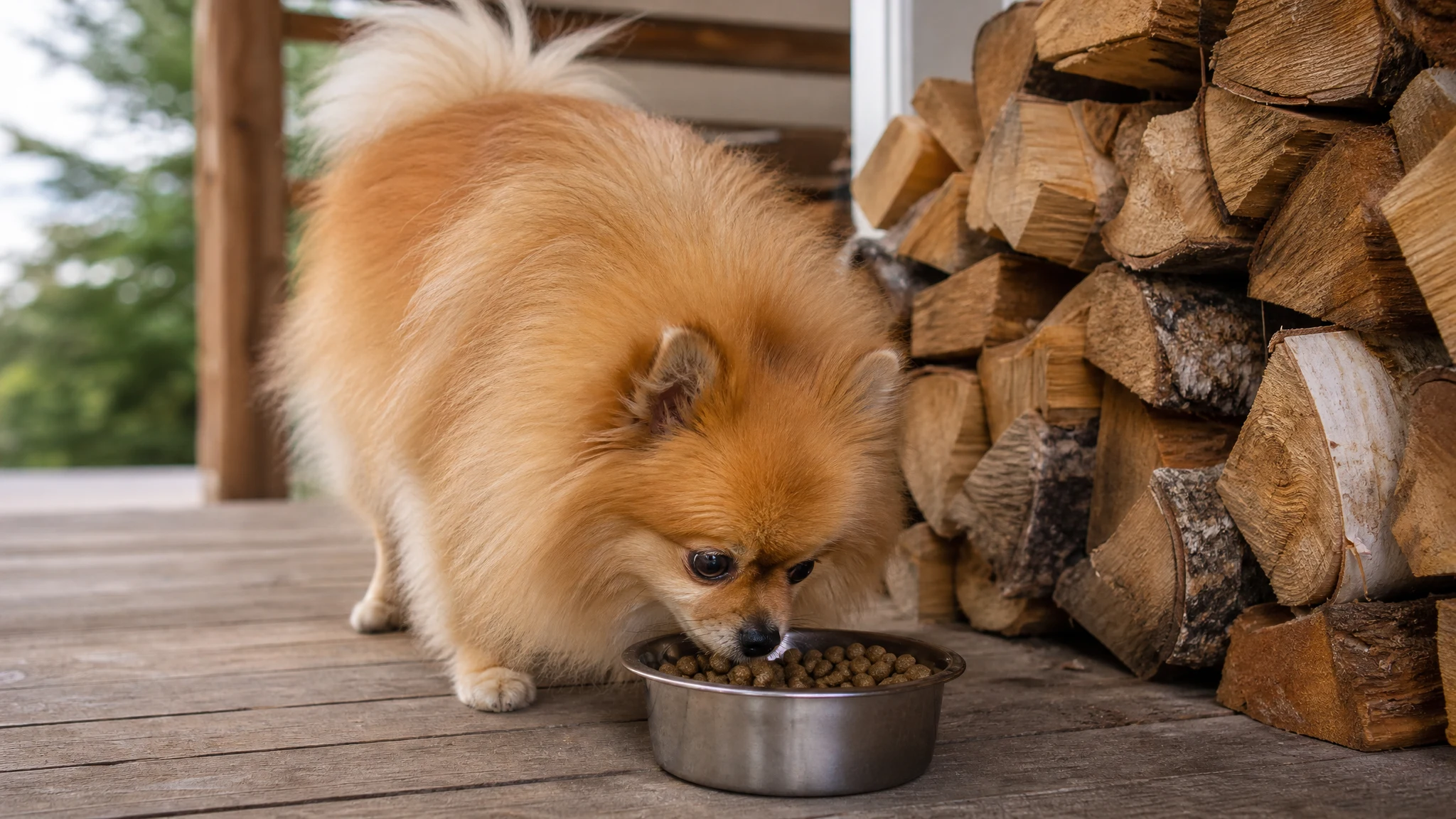
Some Pomeranians eat as if the bowl might vanish. A slow feeding dog bowl has ridges, mazes or raised shapes that make a dog work around the food instead of swallowing it in a few gulps. For a 3 to 7 pound dog, the details matter more than the marketing suggests.
This guide explains when a slow feeder may be worth trying, what to look for, and how to introduce one step by step. We have not tested any bowls ourselves. Where we mention food numbers, we compared label data from the brands. We did not run feeding trials or taste tests.
Why a Pomeranian might need a slow feeder
A slow feeder is not a medical device, and no bowl can prevent or treat a disease. It is a feeding tool. The reasons to try one are practical.
- Fast eating. Some dogs finish a tiny meal in seconds. A textured bowl can stretch that out and make mealtime less of a vacuum act.
- Mealtime boredom. A Pomeranian is a bright, busy dog. Working a little for food can make the meal more engaging.
- Calorie awareness. PetMD's Pomeranian breed page advises that treats, chews and toppers count toward daily calories to avoid obesity. A slow feeder does not change the calories, but it can make a measured portion feel more satisfying. Weight also matters for this breed, since PetMD lists collapsing trachea among its health problems.
If your dog gags, vomits, coughs or seems distressed after eating, do not rely on a bowl to fix it. Call your veterinarian. A veterinarian decides what is right for an individual dog.
An important caution for puppies and tiny adults
PetMD notes the breed has a higher than average risk of hypoglycemia (low blood sugar), especially in puppies. PetMD recommends a high-quality AAFCO-compliant food and frequent meals. Puppies get multiple meals a day, and adults and seniors get two to three. The breed information site pomeranian.org says most puppy hypoglycemia cases come from insufficient or low-quality food.
That affects how you use a slow feeder. The goal is a slightly slower meal, not a delayed or skipped one. If a puppy struggles with a puzzle-style bowl and eats less than normal, switch to a plain bowl. Ask your veterinarian before using any feeding tool with a young puppy or a dog with a health condition.
Materials needed
- A slow feeding dog bowl sized for a toy dog (see the checklist below).
- Your dog's regular complete and balanced food.
- A kitchen scale or a standard measuring cup.
- A non-slip mat or towel under the bowl.
- A plain bowl as a backup.
- Fresh water nearby.
What to look for in a bowl for a toy breed
- Shallow, low ridges. Deep mazes made for large dogs can frustrate a small muzzle. Look for gentle ridges or short bumps.
- Wide enough openings. A Pomeranian's face is small and fluffy. Narrow channels may trap the coat and the kibble.
- Stable base. A light bowl slides easily on a hard floor.
- Easy to wash. Grooves collect residue, so choose a bowl that you can scrub or put in the dishwasher if the maker says it is safe.
- No cracks or rough edges. Dental disease is on PetMD's list of the breed's health problems. Chewing a damaged plastic bowl is not a good use of those small teeth.
We do not link to bowls here. Check the maker's own page for materials and size before you choose.
Step-by-step: introducing a slow feeder
Step 1: Confirm the meal amount first
Decide how much food your dog should get before you change the bowl. Food labels give starting points, not rules. Here are a few examples from the brands' own pages:
- Royal Canin's Pomeranian Adult dry food lists 352 kcal per cup. Its feeding table gives 1/4 cup (24 g) per day for a 2.2 pound dog at low activity.
- VICTOR's Hi-Pro Plus Small Breed Adult lists 360 kcal per cup. Its chart gives 0.5 cup daily for a 5 pound dog.
- Hill's Adult 7+ Small & Mini dry food lists 359 kcal per cup. Its chart starts at 1/4 cup for a 2 pound dog and tells owners to adjust to maintain optimal weight.
These differ because the foods differ in calories and in how the charts are built. Use the chart on your own dog's food, then adjust with your veterinarian. For a fuller look at age and weight, see our guide on how much to feed a Pomeranian by age.
Step 2: Keep the same meal schedule
PetMD suggests puppies eat several meals a day and adults two to three. PetMD also advises feeding adult food from about 1 year of age. Keep your usual times. A new bowl is not a reason to change the schedule.
Step 3: Weigh or measure the portion
Tiny dogs get tiny portions, and a few extra pieces can be a real share of the day. A kitchen scale is more accurate than a cup. Use the grams on the label when the brand gives them.
Step 4: Do a trial run with the plain bowl nearby
Put the slow feeder on a non-slip mat. Add half the meal and watch. If your dog engages, add the rest. If your dog backs away, pour the food into the plain bowl and try again another day.
Step 5: Start with a small challenge
Spread the kibble across the bowl so it is easy to reach. Keep the first few meals simple. Praise calmly and let your dog work at its own pace. Never scold a dog that is confused by the new bowl. Reward-based, patient handling is what the American Veterinary Society of Animal Behavior (AVSAB) supports.
Step 6: Watch the whole meal
Stay nearby for the first week. Note how long the meal takes, whether your dog gets frustrated, and whether any food is left over. Stop if there is coughing, gagging or obvious stress.
Step 7: Clean the bowl after every meal
Wash it with warm soapy water and rinse well. Let it dry fully before the next meal.
Tips
- Use it for dry food or fresh food as the maker allows. Some bowls suit kibble better than wet or fresh food. Check the maker's instructions.
- Count everything. If you use part of the daily kibble as training treats, subtract it from the bowl.
- Keep the bowl at a comfortable height. A dog this small should not have to stretch or crane its neck.
- Be flexible. Some dogs do well with a slow feeder, and some do not need one at all.
Common mistakes to avoid
- Buying a bowl made for a large dog. Deep, tall obstacles can be too hard for a toy breed.
- Treating the bowl as a diet plan. It changes how fast the food is eaten, not how much is eaten.
- Making a puppy wait. Given the breed's risk of low blood sugar, do not let a bowl stand between a puppy and a meal.
- Adding toppers without counting them. Toppers add calories, as PetMD points out.
- Ignoring a chewing habit. If your dog gnaws the bowl, take it away and use a plain one.
- Changing the food and the bowl on the same day. Change one thing at a time so you can tell what is working.
What results to expect
Many owners find that a slow feeder lengthens mealtime and gives their dog something to do. It may help some dogs eat at a calmer pace. Results vary, and some dogs ignore the bowl or find it frustrating.
A slow feeding dog bowl does not prevent, treat or cure any condition. If you have a concern about vomiting, weight, teeth or breathing, your veterinarian is the right person to ask. They can also confirm amounts for a dog with a health condition.
When to skip the slow feeder
- Your puppy is under a veterinarian's instructions for frequent feeding or low blood sugar.
- Your dog shows stress, coughing or gagging with the bowl.
- Your dog is already a calm, steady eater.
- Your veterinarian has advised a particular feeding method.
For some dogs, scattering a measured portion across a clean mat or using a plain bowl is just as good. The best setup is the one your dog eats from comfortably and that keeps the daily portion accurate.