Wet Dog Food for Pomeranians: How Much and How Often to Feed
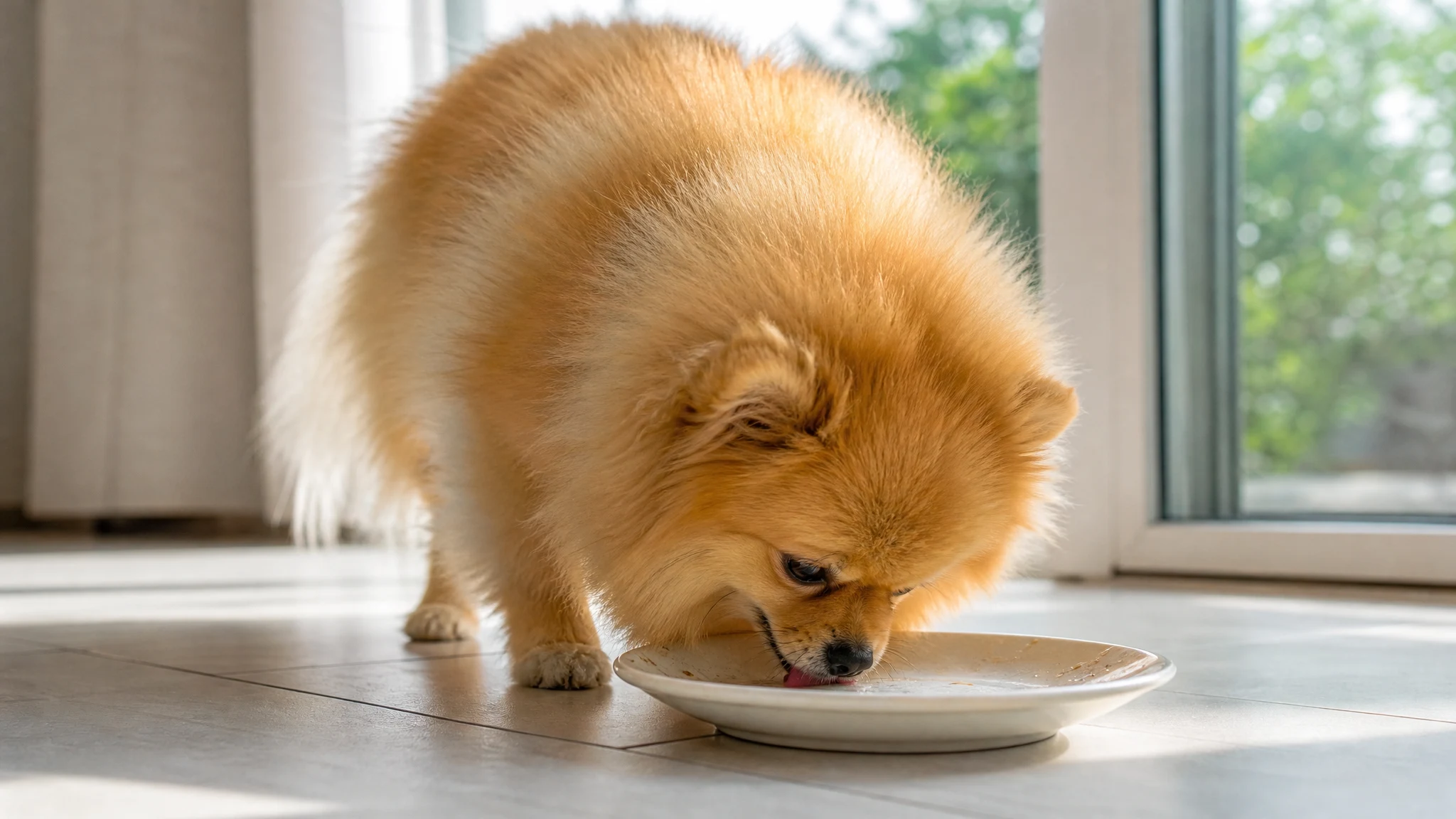
General nutrition information compiled from product labels and published sources, not veterinary advice. Your veterinarian is the right person to choose a diet for your dog, especially one with a health condition.
Pomeranians are tiny, so small mistakes show up fast. A few extra spoonfuls a day is a big jump for a dog that weighs 3 to 7 pounds, according to PetMD's Pomeranian breed page. A skipped meal matters too, because the breed has a higher than average risk of low blood sugar.
This guide shows how to work out a wet food portion, split it into meals, and adjust it over time. It also explains how to judge the best wet dog food for your dog by reading the label instead of the front of the can.
How we compared wet foods
We compared label data only: the AAFCO statement, ingredient order, calories and the feeding table published by each brand. We did not run feeding trials or taste tests, and we did not feed any of these foods to dogs. Treat what follows as a way to read labels, not as a ranking.
One limit matters here. Among the products we have label data for, the only true canned wet food is a senior formula from Hill's Science Diet. Several fresh foods exist as well, but they are refrigerated or frozen rather than canned. For other wet foods, check the brand's own page for the label details.
What you need
- A can or tray of wet food with an AAFCO statement for your dog's life stage.
- The feeding table from the brand's own product page or the label.
- A kitchen scale or measuring spoons. Eyeballing is how small dogs end up overfed.
- Your dog's current weight, ideally from a recent vet visit or a home scale.
- A notebook or phone note to track portions, treats and body condition.
- A shallow bowl and an airtight container for leftovers in the fridge.
Step 1: Match the food to your dog's life stage
Start with the AAFCO statement. It should say the food is complete and balanced for your dog's stage. For example, Hill's Science Diet says animal feeding tests using AAFCO procedures substantiate that its Adult 7+ Small & Mini Chicken & Barley Entree provides complete and balanced nutrition for maintenance of adult dogs.
Maintenance means adult. PetMD advises feeding adult food to dogs at least 1 year old. Before then, look for a statement that covers growth or all life stages. A maintenance-only food is not meant for a growing puppy.
A Pomeranian is a toy breed, well under the 70 pound size AAFCO uses for large dogs. So "except for growth of large size dogs" on a label does not matter for this breed.
Step 2: Read the label for calories, not just ingredients
Calories decide portion size. The Hill's Adult 7+ Small & Mini Chicken & Barley Entree lists 174 kcal per 5.8 ounce can, or 1065 kcal per kilogram. Note that this is per can, not per cup. Wet foods are often listed per can, so do not borrow a cup figure from a dry food.
The first five ingredients of that recipe are water, chicken, cracked pearled barley, pork liver and whole grain corn. Water is first because canned food is mostly moisture. That is normal, but it means the protein and fat percentages on the can are not comparable to a dry food's numbers.
Hill's gives dry matter averages for this recipe: protein 21.9 percent, fat 16 percent and crude fiber 2 percent. These are averages, not guaranteed minimums. To compare two wet foods fairly, compare the same kind of figure on both labels.
Step 3: Find the starting portion in the feeding table
Brand tables use weight, and some use age or activity level too. For the Hill's senior can, sample daily amounts run from 1/2 can for a 2 pound dog to 3 1/2 cans for a 25 pound dog. A typical adult Pomeranian falls between those weights, so read the exact row for your dog's weight on the Hill's page or the can.
Royal Canin's Pomeranian adult dry food shows how activity changes a table. Its guide lists 1/4 cup (24 g) per day for a 2.2 pound dog at low activity. A more active dog of the same weight gets more. If your wet food's table has activity columns, pick the one that honestly describes your dog.
Hill's tells owners to adjust amounts as necessary to maintain optimal weight and to ask a veterinarian if unsure. Treat the table as a starting point, not a prescription.
For a breakdown by age, see our Pomeranian feeding chart by age.
Step 4: Split the daily amount into meals
PetMD says puppies get multiple meals a day. Adults and seniors get two to three meals a day. The reason is the breed's higher than average risk of hypoglycemia, or low blood sugar. The pomeranian.org breed site adds that most puppy hypoglycemia cases come from insufficient or low-quality food.
In practice, divide the daily portion by the number of meals and measure each one. Keep meal times steady. Wet food spoils faster than kibble, so a long gap between meals is not solved by leaving a bowl out.
If your puppy seems weak, wobbly or unusually sleepy, treat it as a reason to call a veterinarian. Do not wait to see if the next meal fixes it.
Step 5: Mix with dry food only if you account for both
Some owners add a spoonful of wet food to kibble. That can work, but the calories add up. Reduce the dry portion to make room, using each label's calorie figure. For reference, Royal Canin lists 352 kcal per cup for its Pomeranian adult dry food, and Hill's lists 357 kcal per cup for its adult small and mini dry food.
Ask your vet to confirm the split if your dog has a health condition. Changing the mix without counting calories is the most common way a small dog gains weight.
Step 6: Count treats, chews and toppers
PetMD advises that treats, chews and toppers count toward daily calories to avoid obesity. For a toy dog, one small treat is a meaningful share of the day. If you give training treats, subtract them from meals.
Weight matters for more than looks. Collapsing trachea is listed among the breed's health problems by PetMD. Extra weight is not the only factor, but your vet can tell you how body condition fits your dog's situation.
Step 7: Serve, store and track
- Serve wet food at room temperature or slightly warmed, never hot.
- Remove uneaten food after a short meal window and discard what has sat out.
- Cover and refrigerate opened cans, and follow the storage directions printed on the label.
- Weigh your dog every couple of weeks and note the number.
- Check body condition by feel. You should be able to feel the ribs under a light covering, even through the coat.
Dental care and wet food
PetMD lists dental disease among Pomeranian health problems, and pomeranian.org says ignored teeth problems quickly cause major trouble. Wet food is soft, so do not assume it supports or harms teeth by itself. Ask your vet about a dental plan. Do not rely on a food label for that.
Common mistakes to avoid
- Using a dry food's cup amount for a can. The calories per serving are different.
- Picking by the front label. Phrases like "gourmet" or "natural" are not nutrition information. The AAFCO statement and calories are.
- Skipping the life stage check. A senior or maintenance recipe is not automatically right for a puppy.
- Forgetting treats. They add up quickly for a dog under 7 pounds.
- Switching foods overnight. Mix the new food in gradually over several days to reduce stomach upset.
- Chasing grain-free as a safety feature. The FDA's investigation into diets and canine dilated cardiomyopathy concerned certain grain-free diets, and the agency's last public update is dated December 23, 2022. A vet can advise on your dog's diet.
What to expect
With a complete and balanced food, measured portions and steady meals, many owners see a stable weight and consistent appetite within a few weeks. Results vary by dog. Coat, energy and stools can change for many reasons, so no food can promise a particular outcome.
Food does not prevent or treat any disease. If your dog has a health condition, a veterinarian decides what to feed and how much. Prescription diets are something only a veterinarian prescribes. Confirm amounts with your vet before changing portions.
Choosing the best wet dog food for your dog
The best wet dog food for a Pomeranian is one that fits its life stage, has an AAFCO statement you can read, and comes with calorie data and a feeding table you can follow. Beyond that, the right choice depends on your dog's weight, tolerance and your vet's advice.
When you shop, check the brand's own product page for the current label, since recipes and tables change. The Hill's page for the Adult 7+ Small & Mini Chicken & Barley Entree is one example of a full label to practice reading.
Sources
- PetMD, Pomeranian breed page
- pomeranian.org, Pomeranian breed information
- Hill's Pet, Science Diet Adult 7+ Small & Mini Chicken & Barley Entree
- Hill's Pet, Science Diet Adult 7+ Small & Mini dry food
- Royal Canin, Pomeranian Adult dry dog food
- FDA CVM, Investigation into Potential Link between Certain Diets and Canine Dilated Cardiomyopathy