Feeding Stations for Pomeranians: What to Look for in a Bowl Setup
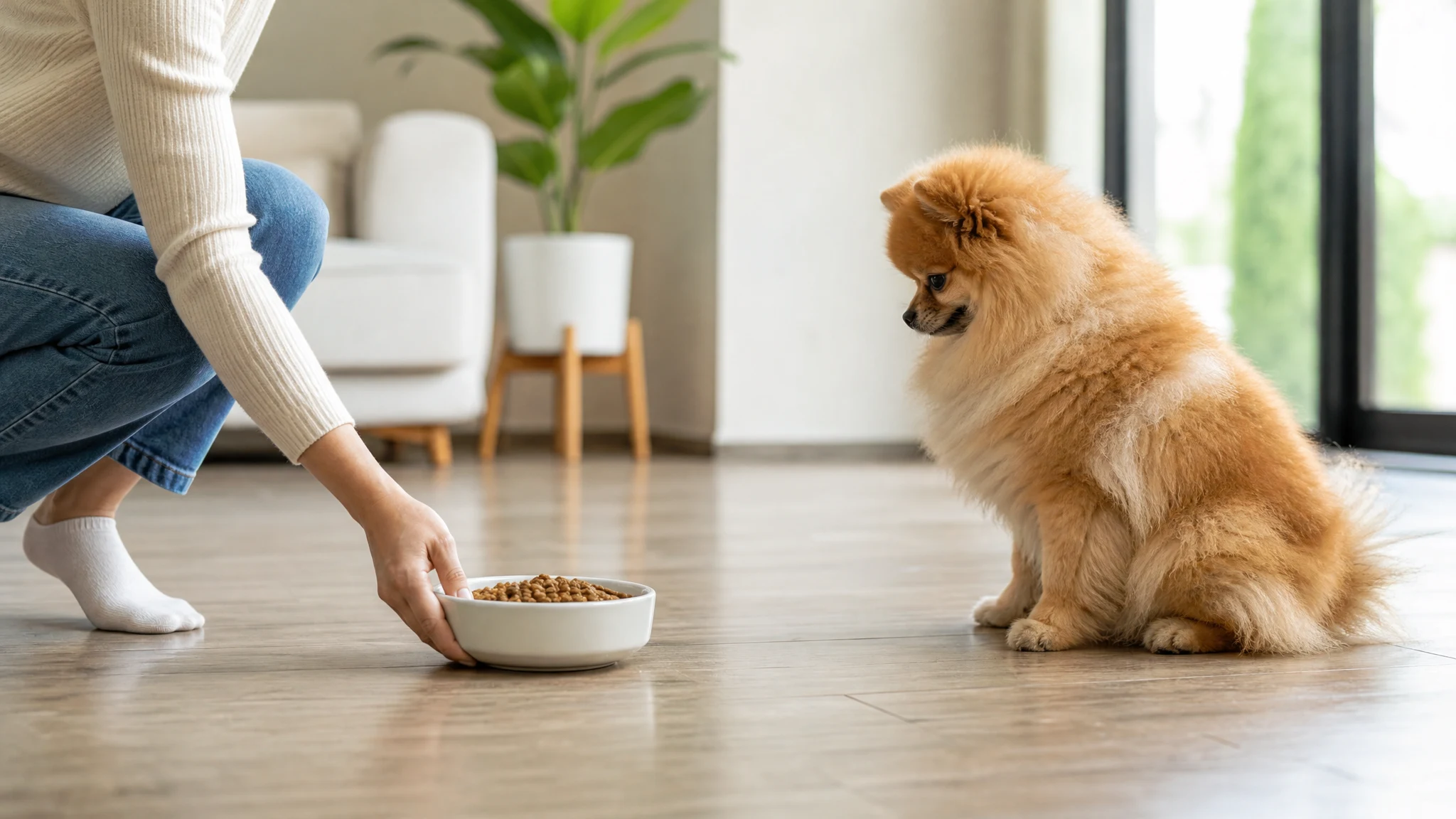
General nutrition information compiled from product labels and published sources, not veterinary advice. Your veterinarian is the right person to choose a diet for your dog, especially one with a health condition.
A dog feeding station is more than a bowl on the floor. It is the spot, the bowls, the measuring tools and the routine that shape how your Pomeranian eats every day.
PetMD lists adult Pomeranians at 3 to 7 pounds. At that size, small details matter: bowl depth, a measuring cup that is easy to level, and a place where meals happen on a steady schedule. This guide walks through building a simple setup, step by step.
Why the setup matters for this breed
PetMD notes that Pomeranians have a higher than average risk of hypoglycemia (low blood sugar), especially as puppies. It recommends an AAFCO-compliant food and frequent meals. Puppies get several meals a day. Adults and seniors get two to three.
The breed information site pomeranian.org says most puppy hypoglycemia cases come from insufficient or low-quality food. A feeding station will not treat or prevent any condition. What it can do is make regular, measured meals easier to keep up. If your puppy seems weak, wobbly or unusually sleepy around mealtimes, call your veterinarian.
PetMD also points out that treats, chews and toppers count toward daily calories, and it lists collapsing trachea and dental disease among the breed's health concerns. A setup that makes portions visible helps with weight management. Your veterinarian decides what is right for an individual dog.
Materials you will need
- One shallow food bowl sized for a very small mouth
- One water bowl, kept separate from the food bowl
- A standard measuring cup or a kitchen scale
- A non-slip mat that fits under both bowls
- A lidded container for the food you are currently using
- A notepad or phone note for tracking meals and treats
- Your dog's food bag or can, so you can read the feeding guide on the label
Step-by-step: build your Pomeranian's feeding station
Step 1: Pick a quiet, stable spot
Choose a corner away from the main walkway, the back door and any other pets' bowls. A small dog that feels crowded may gulp food or walk away from it.
Pick a hard floor you can wipe, or put a mat down. Keep the spot the same every day. Routine helps you notice when your dog skips a meal, which matters in a breed where PetMD flags blood sugar concerns.
Step 2: Choose a bowl that fits a toy-sized mouth
Look for a shallow, wide bowl with a low rim. A deep bowl can make it hard for a 3 to 7 pound dog to reach kibble at the bottom. A bowl that is too large also makes a small portion look tiny, which can tempt you to add more.
Check three things before you buy:
- Weight: It should not tip when your dog nudges it.
- Surface: It should be smooth and easy to wash. Scratched or cracked bowls are harder to clean well.
- Height: Your dog should be able to eat without stretching or climbing in.
We did not test any bowls. These are practical checks, not a ranking. Manufacturers' claims about a bowl improving digestion or posture are marketing until a veterinarian says otherwise for your dog. If you are considering a raised bowl, ask your veterinarian first.
Step 3: Set up fresh water beside the food
Put a separate, shallow water bowl next to the food bowl. Wash both daily. Refill water at every meal and check it during the day.
Step 4: Read the label and set a starting amount
The label on your dog's food is the starting point for portions. Feeding guides use the dog's weight and sometimes activity level. They are guides, not rules. Adjust as needed to keep your dog at a healthy weight, and ask your veterinarian if you are unsure.
Here are a few examples taken from brand pages, to show how different the numbers can be:
- The Royal Canin Pomeranian Adult dry food page lists 1/4 cup (24 g) per day for a 2.2 pound dog at low activity. The label gives 352 kcal per cup, as fed (calculated).
- The VICTOR Hi-Pro Plus Small Breed Adult page lists 0.5 cup daily for a 5 pound dog, using an 8 oz measuring cup. The label gives 360 kcal per cup.
- The Freshpet Vital Small Breed page lists 1/2 to 3/4 cup per day for dogs in the 5 to 10 pound range. Its label gives 294 kcal per cup.
Notice that calories per cup vary from product to product, and fresh foods differ from dry. Switching foods means re-checking the portion. For a full breakdown by age, see our guide to how much to feed a Pomeranian by age.
PetMD advises feeding adult food to dogs at least 1 year old. Before that, use a puppy or all-life-stages food, and confirm the choice with your veterinarian. If your dog has a health condition, confirm amounts with your vet before changing anything.
Step 5: Measure every meal
Use a level measuring cup or, better, a kitchen scale. A heaped scoop can easily add up to a meaningful share of a tiny dog's daily calories.
Keep the measuring cup inside the food container so it is always the same one. Write the daily amount on a note taped to the lid, and split it into the number of meals your veterinarian recommends.
Step 6: Set a meal schedule
PetMD says puppies need multiple meals a day, and adults and seniors do well with two to three. Pick set times and stick to them. Your veterinarian can tell you the right number of meals for your puppy's age and size.
Pick up uneaten food after a short time, particularly wet or fresh food. Do not leave it out for hours.
Step 7: Count treats and toppers
Keep a small tally near the station. PetMD says treats, chews and toppers count toward daily calories. For a dog this small, a few extra pieces can add up quickly.
If you use treats for reward-based training, take them out of the daily portion. Training stays humane and positive, and the dog stays at a steady weight.
Step 8: Clean and review weekly
Wash bowls with warm soapy water every day. Wipe the mat and the floor around the station. Once a week, check your dog's body condition and your notes. If portions seem off, talk to your veterinarian rather than guessing.
Tips for a smoother routine
- Keep the setup boring. Same place, same bowl, same times.
- Store food in a sealed container. Keep the bag's label or take a photo of it, so you can check the AAFCO statement and feeding guide later.
- Watch mealtime behavior. Skipped meals, vomiting or lethargy deserve a call to the vet, especially in a puppy.
- Brush and check teeth. PetMD lists dental disease among the breed's health problems, and pomeranian.org says ignored tooth problems quickly cause major trouble. Ask your vet about dental care.
- Change foods slowly. Ask your veterinarian how to transition.
Common mistakes to avoid
- Using a big bowl. It hides how much you are really feeding.
- Free-feeding a toy breed without a plan. It makes it hard to spot appetite changes and track calories.
- Eyeballing portions. Use a cup or scale every time.
- Forgetting treats. They count toward calories.
- Trusting marketing claims. A bowl or food that claims to fix a health problem is not a substitute for veterinary advice. No food or bowl prevents or cures any disease.
- Feeding the wrong life stage. A puppy food and an adult food are not interchangeable. Check the AAFCO statement on the label.
What to expect
A consistent station may make mealtimes calmer and make it easier to notice changes in appetite. With measured portions and counted treats, many owners find it simpler to keep a small dog at a steady weight, though results vary by dog.
A good setup supports a good routine. It does not replace advice from your veterinarian, who can confirm amounts and meal frequency for your dog's age, weight and health.
How we handled the product examples
We compared label data from brand pages. We did not run feeding trials or taste tests, and we did not test any bowls. Product pages change, so check the brand's page and your own bag for current information.