Elevated vs Floor Feeding for Pomeranians: Does It Matter?
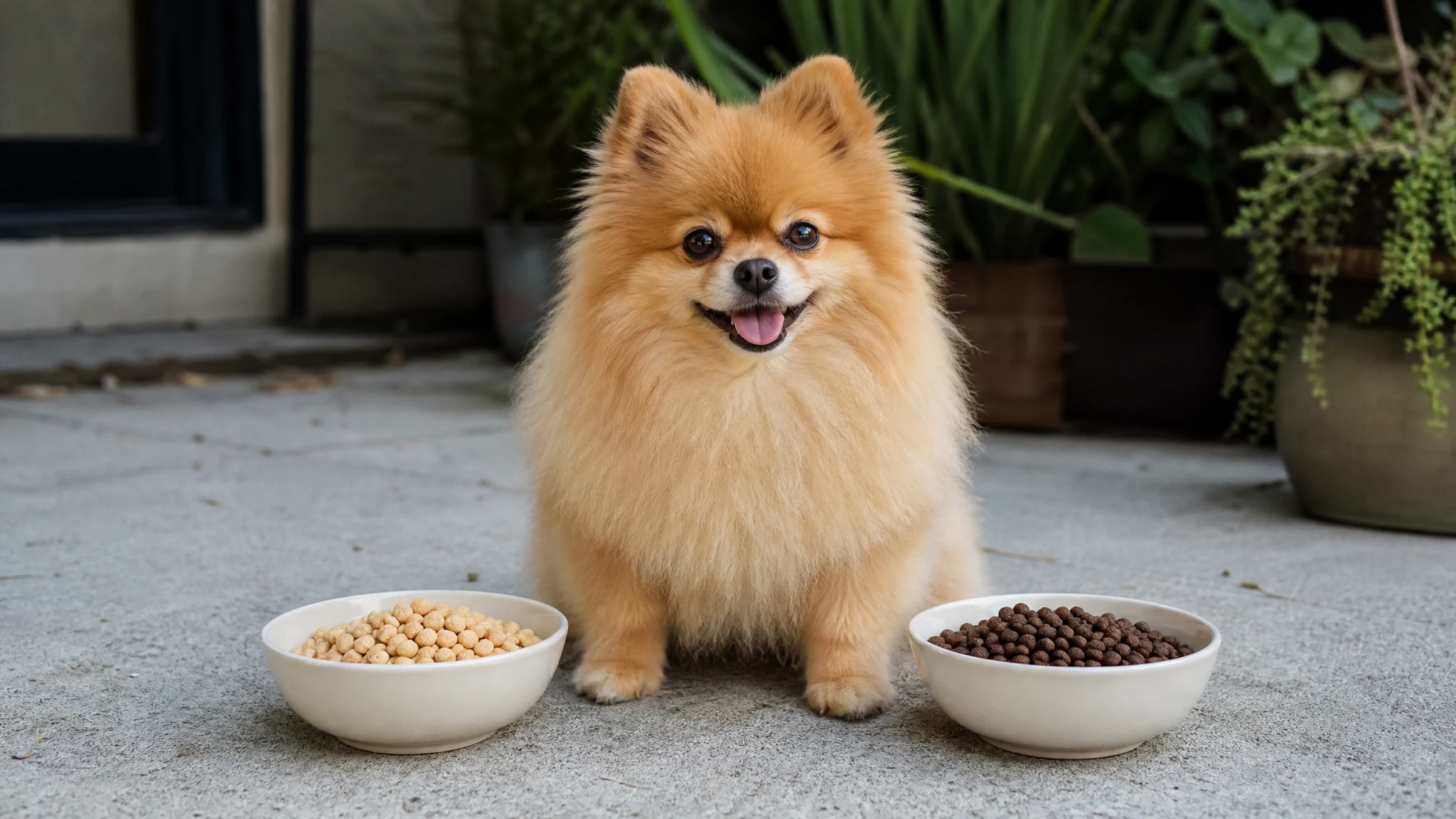
General nutrition information compiled from product labels and published sources, not veterinary advice. Your veterinarian is the right person to choose a diet for your dog, especially one with a health condition.
Raised bowl stands are sold with big promises. A Pomeranian is a toy dog, so it is fair to ask whether the height of the bowl changes anything at all.
Short answer: the source material we relied on says nothing about bowl height for this breed. What it does cover is food quality, meal frequency and calorie control. Those matter far more than where the bowl sits. This guide shows how to set up a dog feeding station that suits a small dog, and how to compare the two options calmly.
What the evidence does and does not say
Be skeptical of any page that says one bowl height is clearly right for every dog. The PetMD Pomeranian breed page, one of our sources, lists breed health concerns such as hypoglycemia (low blood sugar), dental disease and collapsing trachea. It does not say that raised bowls help or harm any of them.
Owners sometimes ask about bloat and bowl height. We make no claim in either direction. If your dog has a health condition, or you have a specific worry, ask your veterinarian. A vet decides what is right for an individual dog.
So treat this as a practical comparison. The goal is a setup your dog eats from comfortably, with the right food in the right amount at the right times.
Materials needed
- A shallow, stable bowl sized for a small mouth. Wide and low is easier for a toy dog than deep and narrow.
- A non-slip mat to catch spills and keep the bowl from sliding.
- A measuring cup, or a kitchen scale if your food label lists grams.
- Your dog's complete and balanced food, with the label handy.
- Optional: a low raised stand, only if you want to try elevated feeding.
- A notebook or phone note to track meals, treats and your dog's body condition.
Step-by-step: set up and compare
Step 1: Start with the food, not the furniture
PetMD recommends a high-quality, AAFCO-compliant food for the breed because of its higher than average risk of hypoglycemia. Look for the AAFCO statement on the bag. It should say the food is complete and balanced for your dog's life stage.
PetMD advises feeding adult food to dogs at least 1 year old. Before that, a puppy or all life stages formula is the usual path. Confirm timing with your vet.
Step 2: Choose a calm spot for the dog feeding station
Pick a quiet corner away from foot traffic, open doors and other pets. Keep it on a surface that is not slippery. Put the water bowl beside the food bowl, and keep both in the same place each day.
A steady location helps a small dog settle into a routine. That routine is useful for a breed where regular meals matter.
Step 3: Begin with a floor bowl
For a 3 to 7 pound adult (the weight range PetMD gives), a standard floor bowl already sits close to the dog's natural eating height. Many Pomeranians eat fine this way.
Set a shallow bowl on the mat. Watch your dog for a few meals. Note whether the dog eats steadily, pushes the bowl around, or gulps and coughs.
Step 4: Measure the food from the label
Use the feeding guide on your food as a starting point, not a fixed rule. Guides vary by brand, weight and activity level. A few examples from brand pages:
- The Royal Canin Pomeranian Adult dry food guide lists 1/4 cup (24 g) per day for a 2.2 pound dog at low activity.
- The VICTOR Hi-Pro Plus Small Breed Adult chart lists 0.5 cup daily for a 5 pound dog, using a standard 8 oz measuring cup.
- The Hill's Science Diet Adult 7+ Small & Mini dry food chart starts at 1/4 cup for a 2 pound dog.
These foods differ in calories per cup, so the same cup does not mean the same energy. For an age-by-age overview, see our guide on how much to feed a Pomeranian. If your dog has a health condition, confirm amounts with your vet.
Step 5: Set the meal schedule
PetMD says puppies get multiple meals a day, and adults and seniors get two to three. The breed's hypoglycemia risk is the reason for the frequent meals. The pomeranian.org breed site adds that most puppy hypoglycemia cases come from insufficient or low-quality food.
Offer meals at the same times daily. Do not stretch gaps between puppy meals to fit your schedule. If your puppy seems weak, wobbly or unusually sleepy, call your vet promptly.
Step 6: Try an elevated bowl, if you want to compare
If you are curious, raise the bowl only slightly. Choose a stand with a wide base that will not tip, and a height that keeps the bowl rim around the dog's chest level. A tall stand makes a toy dog stretch up, which defeats the purpose.
Keep everything else the same: same food, same amount, same spot. Change one thing at a time so you can tell what made a difference.
Step 7: Watch, note and decide
Over a week or two, write down how your dog eats on each setup. Useful notes include:
- Does the dog eat comfortably, or fuss and walk away?
- Is there coughing, gagging or fast gulping?
- Is there less mess, or more?
- Is body weight steady?
Keep the setup that works. Bring any coughing or eating trouble to your vet, especially since collapsing trachea is listed among the breed's health problems.
Floor vs elevated: a plain comparison
| Point | Floor bowl | Low elevated stand |
|---|---|---|
| Fit for a toy dog | Usually close to natural eating height | Works only if kept low |
| Stability | Very stable with a mat | Depends on the stand's base |
| Cost and clutter | Lowest | One more item to buy and clean |
| Health claims | None supported by our sources | None supported by our sources |
We compared label data and breed information from published sources. We did not run feeding trials or taste tests, and we did not test any bowls or stands.
Tips
- Count everything. PetMD advises that treats, chews and toppers count toward daily calories, which helps avoid obesity. Extra weight is also a concern for a dog with a collapsing trachea.
- Use the same measuring cup every time. A scoop that drifts bigger over the weeks adds up.
- Keep the bowl clean. Wash it daily, since small dogs often lick the rim.
- Mind the teeth. PetMD lists dental disease among Pomeranian health problems, and pomeranian.org says ignored tooth trouble quickly becomes a major problem. Ask your vet about dental care.
- Switch foods slowly. Mix the new food in with the old over several days unless your vet says otherwise.
- Fresh and wet foods have their own guides. Freshpet, for example, lists 5 to 10 pound dogs at 1/2 to 3/4 cup per day for its Vital Small Breed recipe, so check each brand's page.
Common mistakes to avoid
- Buying a tall stand for a tiny dog. The bowl should not force the dog to reach upward.
- Assuming raised means safer. No source we used says so. Ask your vet if you are worried about a specific condition.
- Free-feeding with no tracking. It makes calorie control hard. Measured meals are easier to adjust.
- Skipping meals for a puppy. Because of hypoglycemia risk, keep the schedule your vet recommends.
- Using a puppy food that is too big a fit. The Royal Canin Small Puppy page states an expected adult weight of 9 to 22 pounds, above a typical Pomeranian's. Ask your vet whether an extra-small formula suits your puppy better.
- Treating a label guide as a rule. It is a starting point. Adjust with your vet based on your dog's body condition.
Expected results
A calm, consistent dog feeding station may make mealtimes tidier and more predictable. It may also make it easier to notice changes in appetite or eating habits.
Bowl height alone is unlikely to change your dog's health. Steady meals, an appropriate complete and balanced food and sensible portions are what the sources emphasize. Results vary by dog. Any ongoing coughing, vomiting, weight change or appetite loss deserves a call to your veterinarian.