Best Training Treats for Pomeranians (and How Many to Give)
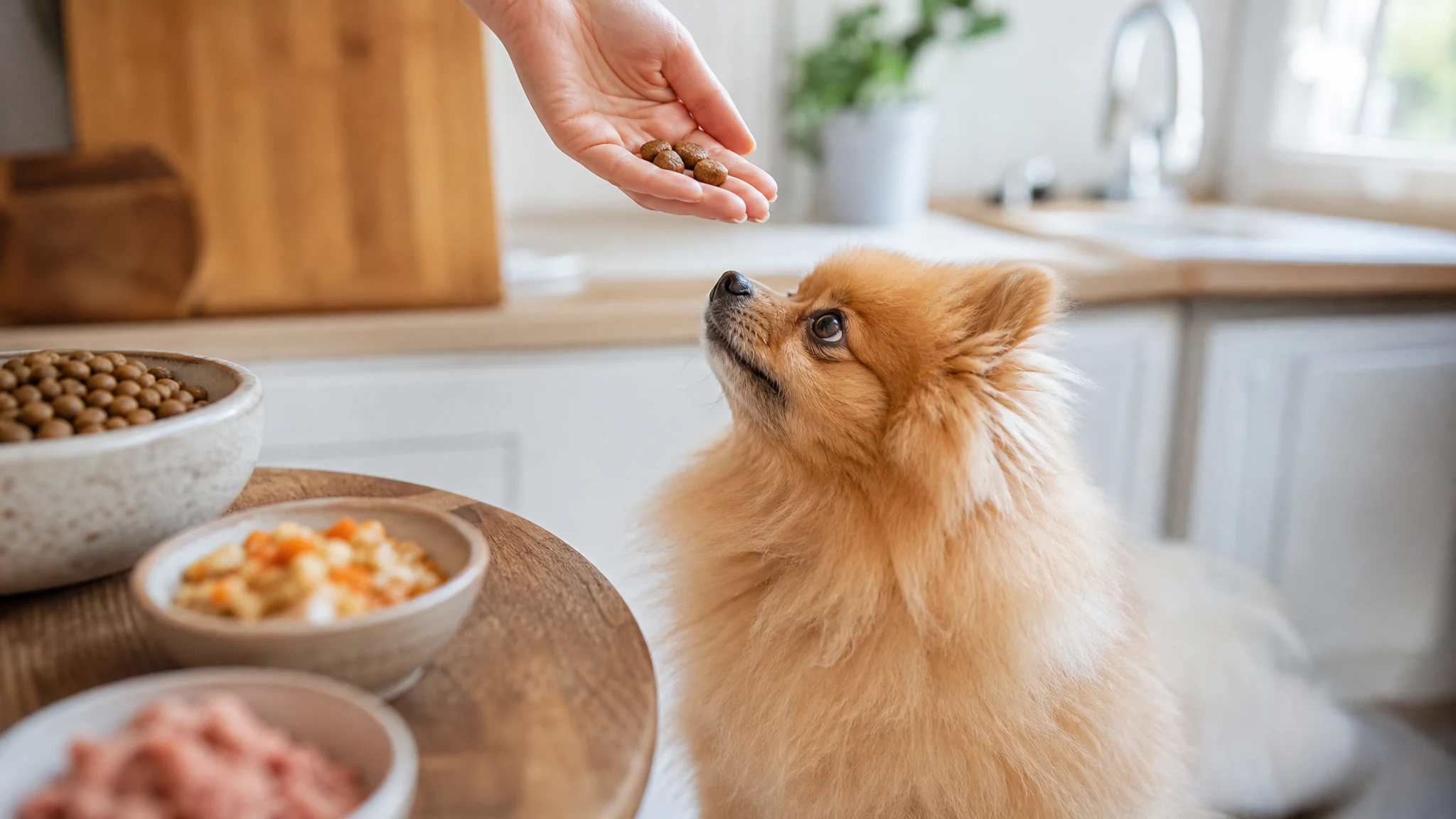
General nutrition information compiled from product labels and published sources, not veterinary advice. Your veterinarian is the right person to choose a diet for your dog, especially one with a health condition.
Pomeranians are quick learners, and food rewards are one of the easiest ways to teach them. The catch is size. A Pomeranian is a toy breed, and PetMD lists the adult weight at 3 to 7 pounds. A handful of careless treats can be a big share of a day's food for a dog that small.
This guide walks through how to choose treats, cut them to a useful size, count them, and use them in a training session. It does not rank brands. It explains how to read a treat label and fit treats into the daily food plan.
What you need
- A few types of small, soft treats, or a single-ingredient option such as freeze-dried meat (see the categories below).
- A small treat pouch or a clean container you can reach quickly.
- A cutting board and a knife or kitchen scissors for shrinking treats.
- The calorie information from the treat package and from your dog's regular food.
- A notepad or phone note to track daily treat counts.
- Your dog's normal meal, since some training can use part of it as the reward.
Three treat categories worth knowing
Pomeranian treats fall into a few broad groups. None is automatically the best. The best treats for Pomeranians are the ones your dog will work for, that you can break into tiny pieces, and that fit the calorie budget.
Soft training treats
Soft treats are easy to tear into small bits and are quick to swallow, so training does not stall while your dog crunches. Check the label for a calorie figure per treat and the ingredient list. Some soft treats are fairly rich, so the pieces should be very small.
Freeze-dried single-protein treats
These are made from one meat, such as chicken. A short ingredient list makes them easy to read, and many dogs find them very appealing. They can be crumbled to the size you want. Look at the calories on the package, because lightweight pieces can still be calorie-dense.
Vegetables
Some owners use small pieces of dog-safe vegetables as a lower-calorie reward. Not every dog likes them, and not every vegetable is suitable. Ask your veterinarian which ones are appropriate for your dog, and cut them small.
Step-by-step: choosing and using treats
Step 1: Check your dog's main food first
Treats sit on top of a complete diet, so start with the main food. A food labeled complete and balanced by an AAFCO statement is the foundation, and treats are extras. PetMD recommends a high-quality AAFCO-compliant food for the breed. If you are still choosing a main food, the comparison of foods by label data shows how we read those labels. We compared label data only. We did not run feeding trials or taste tests.
Step 2: Read the treat label
Find three things: the calories per treat or per serving, the first few ingredients, and whether the package says it is a treat or a complete food. Treats are usually labeled for intermittent or supplemental feeding. Skip any treat that does not show calories, because you cannot budget what you cannot count.
Step 3: Set a daily treat budget
A commonly cited guideline, attributed to the World Small Animal Veterinary Association (WSAVA), is to keep treats to about 10 percent of daily calories. Confirm the right number for your dog with your veterinarian, since a dog with weight concerns or other needs may need less.
Here is the arithmetic using a real label as an example. The Royal Canin Breed Health Nutrition Pomeranian Adult dry food lists 352 kcal per cup. Its feeding table lists 1/4 cup (24 g) per day for a 2.2 pound dog at low activity. That is about 88 kcal a day. Ten percent of that is under 9 kcal for all treats combined.
That dog is lighter than the breed's usual adult weight, and feeding tables are starting points. But the lesson holds. For a toy breed, the treat budget is tiny, so each reward has to be tiny too.
Step 4: Cut treats very small
For training, the size of the treat matters less than how fast you can deliver it. A piece about the size of a pea, or smaller, is a practical starting point for a Pomeranian. Crumble freeze-dried pieces. Slice soft treats into thin strips and then into tiny cubes. One store-bought treat can often become many rewards.
Small pieces also keep sessions going longer without filling your dog up.
Step 5: Count the pieces, not just the treats
Work out how many calories one cut piece holds. If a treat lists a number per piece, divide by how many pieces you make from it. Then count the day's pieces against your budget. Writing the count down for a week shows you how fast it adds up.
PetMD advises that treats, chews and toppers all count toward daily calories to avoid obesity. That includes the bit of cheese or chicken you hand over in the kitchen.
Step 6: Reward the behavior right away
Keep rewards reward-based, in line with the approach supported by the American Veterinary Society of Animal Behavior (AVSAB). Mark the moment your dog does the right thing with a short word such as "yes," then hand over the treat within a second or two. Timing teaches more than treat quality does.
Start in a quiet room with simple behaviors such as sit or coming to you. Keep sessions short, a few minutes at a time, and end while your dog is still keen.
Step 7: Use meal food for some sessions
On days with a lot of training, take some of the reward from your dog's regular meal. Set aside part of the measured portion and use those kibbles as rewards. This keeps the day's total steady without cutting the dog's attention.
Pomeranians are listed by PetMD as having a higher than average risk of hypoglycemia (low blood sugar), especially as puppies. PetMD recommends frequent meals for the breed, with puppies getting several a day and adults two to three. So do not skip or shrink a meal to make room for treats. If you have any worry about how your puppy is eating, call your veterinarian.
Step 8: Mix up the rewards
Use ordinary rewards for easy tasks and a more exciting one for harder tasks. A soft treat piece can be the everyday reward, and a crumble of freeze-dried meat can be the special one. Keeping the special one rare helps it stay special, and you use fewer calories overall.
Tips
- Keep treats of one type per session. It makes counting easier.
- Introduce new treats slowly. A new food can upset some dogs' stomachs. Try one new item at a time so you know the cause if something disagrees with your dog.
- Think about teeth. PetMD lists dental disease among the breed's health problems. Ask your veterinarian about dental care, and do not treat a sticky soft treat as a tooth cleaner.
- Watch the trend, not one day. Check your dog's body condition over weeks. If weight creeps up, trim the treat count first.
- Mind the trachea. PetMD lists collapsing trachea among the breed's health problems. Keeping your dog lean is one practical way owners manage weight-related strain, and your veterinarian can advise on it.
Common mistakes to avoid
- Treats that are too big. A full-size treat can be a large share of a toy dog's daily calories. Break it up.
- Not counting treats at all. Many small rewards add up quickly.
- Counting only packaged treats. Table scraps, chews and food toppers count as well.
- Replacing meals with treats. Treats are not a complete diet. Because of the breed's hypoglycemia risk, keep meals regular.
- Ignoring the label. Treats with no calorie figure are hard to budget. Pick one that shows it.
- Using treats to cover for bad timing. If the reward comes late, your dog may link it to the wrong behavior.
- Using harsh methods when training stalls. Go back to an easier step and reward more often. Never use punishment or intimidation.
What to expect
With short, consistent sessions and well-timed rewards, many Pomeranians start to respond to simple cues within a few weeks. Results vary with age, temperament and how often you practice. Puppies tend to have short attention spans, and some adults are choosy about food.
A steady treat budget may also help you keep your dog's weight stable, though diet alone does not decide a dog's health. No treat can prevent or treat a disease, and a veterinarian decides what suits an individual dog. If your dog has allergies, a sensitive stomach or a medical condition, ask your vet before changing treats.
If you need breed-specific advice that goes beyond this page, check with your veterinarian or a national breed club. Treat manufacturers can answer questions about their own products.
A quick checklist
- Choose a complete and balanced main food.
- Pick treats that list calories and a short ingredient list.
- Set a treat budget with your veterinarian, using the 10 percent guideline as a starting point.
- Cut treats to pea-sized pieces or smaller.
- Count the pieces and track them for a week.
- Reward right away and keep sessions short.
- Use part of the meal as rewards on busy training days.
- Watch body condition and adjust.