Is Pedigree Complete Nutrition a Good Fit for an Adult Pomeranian?
General nutrition information compiled from product labels and published sources, not veterinary advice. Your veterinarian is the right person to choose a diet for your dog, especially one with a health condition.
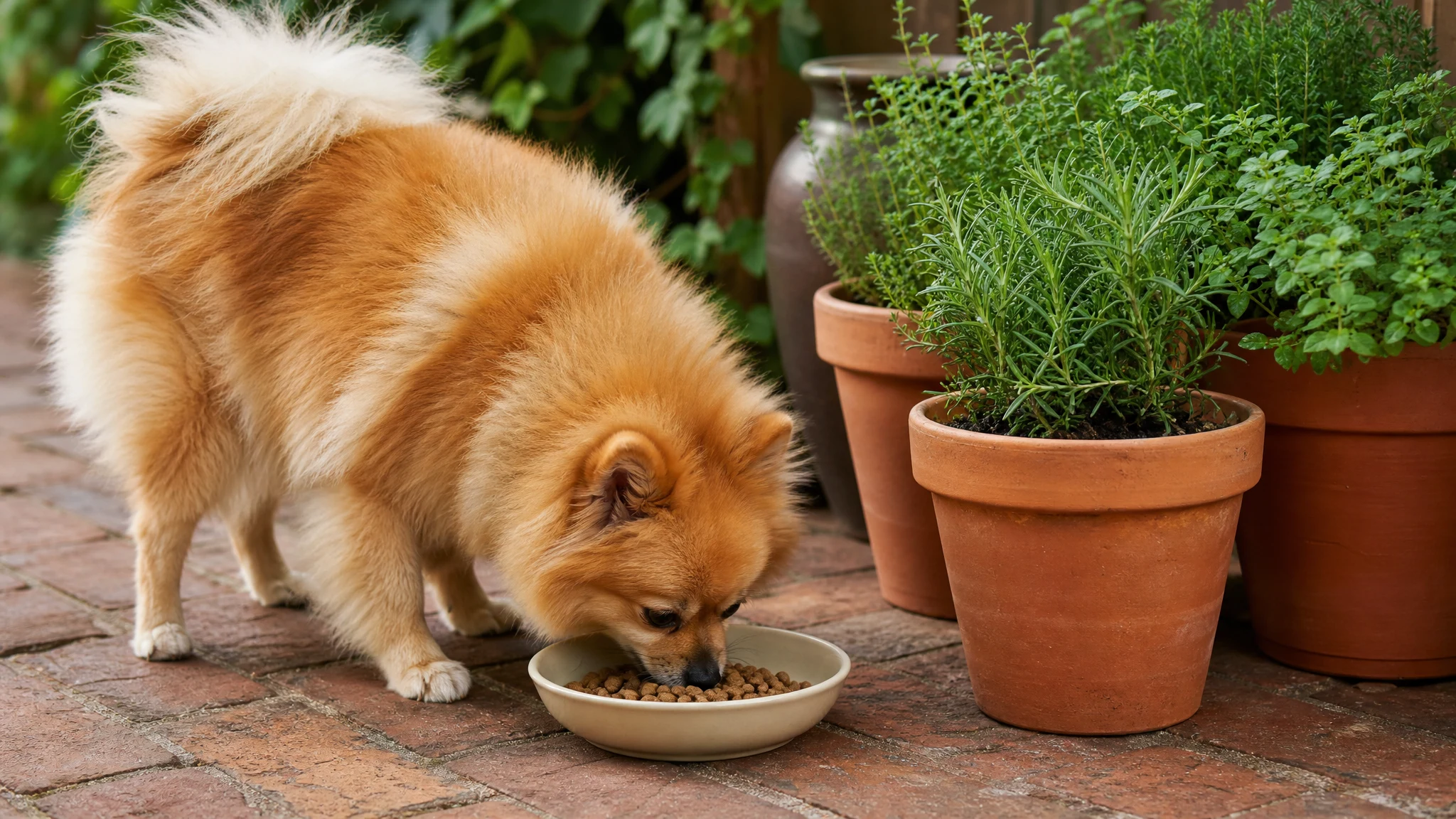
Pedigree Complete Nutrition adult dry dog food is easy to find, so many Pomeranian owners ask whether it suits a 3 to 7 pound dog. A fair answer has to come from the bag in your hand, not from a headline.
This guide is a method, not a verdict. We did not feed, test or taste any food. We compare label data only, and we did not run feeding trials. Nothing here replaces your veterinarian, who decides what an individual dog should eat.
We also do not have the Pedigree label data for this page. We will not guess at its ingredients, protein, fat or calories. Check those on the bag or on the brand's own website, and use the steps below to judge them.
What a Pomeranian needs from an adult food
PetMD describes the Pomeranian as a 3 to 7 pound dog with a typical lifespan of 12 to 16 years. That is a toy-sized dog, so small mistakes in portions add up quickly.
PetMD also says to feed adult food to dogs at least 1 year old. Three breed points shape the food choice:
- Low blood sugar risk. PetMD notes a higher than average risk of hypoglycemia in the breed. It recommends a high-quality, AAFCO-compliant food and frequent meals. Adults and seniors get two to three meals a day.
- Calorie control. PetMD advises that treats, chews and toppers count toward daily calories to avoid obesity. PetMD also lists collapsing trachea among the breed's health problems, which is one more reason to watch weight.
- Teeth. PetMD lists dental disease among Pomeranian health problems. The site pomeranian.org says ignored tooth problems quickly cause major trouble.
For a wider look at these factors, see Pomeranian nutrition and the diet factors that matter.
Materials you need
- The Pedigree Complete Nutrition adult dry dog food bag, or a clear photo of its back panel
- A pen and paper, or a notes app
- A standard measuring cup
- A kitchen scale that reads in grams or ounces, if you have one
- Your dog's current weight, ideally from the last vet visit
- The brand's own product page, to confirm anything the bag leaves unclear
Step 1: Confirm your dog is ready for an adult food
Check your Pomeranian's age first. PetMD says adult food is for dogs at least 1 year old. A younger dog needs a growth food, and a food made for adults is the wrong match.
Ask your veterinarian if your dog is pregnant, nursing, underweight or has a health condition. Those dogs have different needs.
Step 2: Find the AAFCO statement
Look near the guaranteed analysis for a sentence that begins with the AAFCO name. It should say the food is complete and balanced, and for which life stage. Write down the exact wording.
Two things to note:
- The life stage. You want "maintenance" or "all life stages."
- How it was substantiated. Some foods are "formulated to meet" the AAFCO profiles. Others say animal feeding tests substantiate the claim. For example, Hill's Science Diet Adult Small & Mini states feeding tests, while Royal Canin's Pomeranian Adult says it is formulated to meet the maintenance profile. Neither wording is a promise about your dog. They are just two different routes to the same statement.
Step 3: Read the first five ingredients
Ingredients are listed by weight before cooking. The first five give a rough picture of what the food is built on. Copy them down in order.
Do not judge a food by one word. A named meat first is not automatically better, and a grain is not automatically a problem. For context, here are first-five lists from other small-dog foods, taken from their brand pages:
- Royal Canin Pomeranian Adult: brewers rice, corn, chicken by-product meal, chicken fat, oat groats
- Hill's Science Diet Adult Small & Mini Chicken & Brown Rice: chicken, brown rice, whole grain wheat, whole grain corn, brewers rice
- VICTOR Hi-Pro Plus Small Breed Adult: beef, chicken meal, beef meal, brown rice, whole grain millet
Grain-inclusive foods are common in this group. The FDA's page on its dilated cardiomyopathy (DCM) investigation was last updated December 23, 2022. The FDA says it does not plan more public updates until there is meaningful new science. If diet and heart health worry you, ask your veterinarian instead of choosing a food on fear.
Step 4: Compare the guaranteed analysis and calories
The guaranteed analysis lists minimum crude protein and fat and maximum fiber and moisture. Find the calorie statement too, usually written as kcal per cup or per kilogram. The table shows how some small-dog dry foods compare on their own pages.
| Food | Protein (min) | Fat (min) | Fiber (max) | Calories per cup |
|---|---|---|---|---|
| Royal Canin Pomeranian Adult | 24.0% | 14.0% | 3.6% | 352 kcal ME, calculated |
| Royal Canin X-Small Adult | 22.0% | 16.0% | 3.5% | 369 kcal ME, calculated |
| VICTOR Hi-Pro Plus Small Breed Adult | 30.0% | 14.0% | 5.0% | 360 kcal |
| Hill's Science Diet Adult Small & Mini | Not stated as a minimum | Not stated as a minimum | Not stated as a maximum | 357 kcal |
Hill's gives dry matter averages instead of guaranteed minimums, so its numbers are not directly comparable. Add the Pedigree figures from your bag as a new row in your own notes, and keep the unit the same.
Do not compare percentages across wet, dry and fresh foods. Moisture changes the math.
Step 5: Think about kibble size and teeth
A 3 to 7 pound dog has a small mouth. Look for kibble described as small or sized for small breeds, and check a piece against your dog's muzzle. Several brands give only general wording here. Royal Canin describes a smaller shape for small-breed jaws, and VICTOR says bite-sized, but neither gives measurements. If the Pedigree bag or brand page gives no size, ask the brand.
Do not assume kibble cleans teeth. Dental disease is a listed Pomeranian concern, so ask your veterinarian about a dental care plan.
Step 6: Turn the feeding guide into a starting point
- Find your dog's weight on the bag's feeding chart.
- Note the daily amount. Treat it as a starting point, not a target.
- Divide it into two or three meals, in line with PetMD's advice for adult Pomeranians.
- Measure each meal with the same cup every time, or weigh it on a scale.
- Subtract treats from the day's food. PetMD says treats, chews and toppers count toward daily calories.
Toy breeds are easy to overfeed because a few extra kibbles are a large share of the day. For comparison, Royal Canin's page lists 1/4 cup (24 g) per day for a 2.2 pound dog at low activity. Your own bag's chart is the one to follow.
Step 7: Switch slowly and watch your dog
If you decide to try the food, change over gradually. Mix a little new food into the old, and increase the share over about a week, or follow your veterinarian's plan. Fast switches can upset a small stomach.
Keep notes for the first several weeks:
- Appetite and energy
- Stool quality
- Body shape, checked by feel and by sight
- Weight on the same scale, every couple of weeks
Contact your veterinarian if your dog skips meals, seems weak or shaky, or vomits. Puppies and toy dogs can get low blood sugar quickly, so do not wait.
Tips and common mistakes
- Trusting the front of the bag. Marketing words are not label data. The AAFCO statement, ingredients and guaranteed analysis are the parts to read.
- Using a large-dog feeding chart. Many charts start well above 3 pounds. Check where your dog falls, and ask your veterinarian if the chart does not reach that low.
- Counting only meals. Chews, toppers and training treats all add calories.
- Feeding one big meal. For this breed, frequent meals are the usual advice.
- Comparing different units. As-fed percentages and dry matter percentages are not interchangeable.
- Picking by price or popularity. Neither tells you whether the food fits your dog.
What results to expect
A food that fits may be associated with steady energy, a healthy weight and well-formed stools. A complete and balanced adult food is designed to meet the AAFCO maintenance profile, but it does not guarantee any outcome for an individual dog.
No food prevents, treats or cures a condition such as dental disease, collapsing trachea or heart disease. If your dog has a health problem, your veterinarian decides the diet. Prescription diets are something only a veterinarian prescribes.
So, is it a good fit?
It depends on what the bag says and how your dog does on it. If the Pedigree Complete Nutrition adult dry dog food label shows an AAFCO statement for maintenance or all life stages, a calorie figure you can measure, and kibble your Pomeranian can chew, it passes the basic checks above. If any of those are missing or unclear, ask the brand or your veterinarian before buying a large bag.
Sources
- PetMD, Pomeranian breed page
- pomeranian.org, Pomeranian health and care information
- FDA Center for Veterinary Medicine, investigation into diets and canine dilated cardiomyopathy
- Royal Canin, Pomeranian Adult Dry Dog Food
- Royal Canin, X-Small Adult Dry Dog Food
- Hill's Pet, Science Diet Adult Small & Mini
- VICTOR Pet Food, Hi-Pro Plus Small Breed Adult