Dog Food and Overall Health: What a Pomeranian's Diet Should Cover
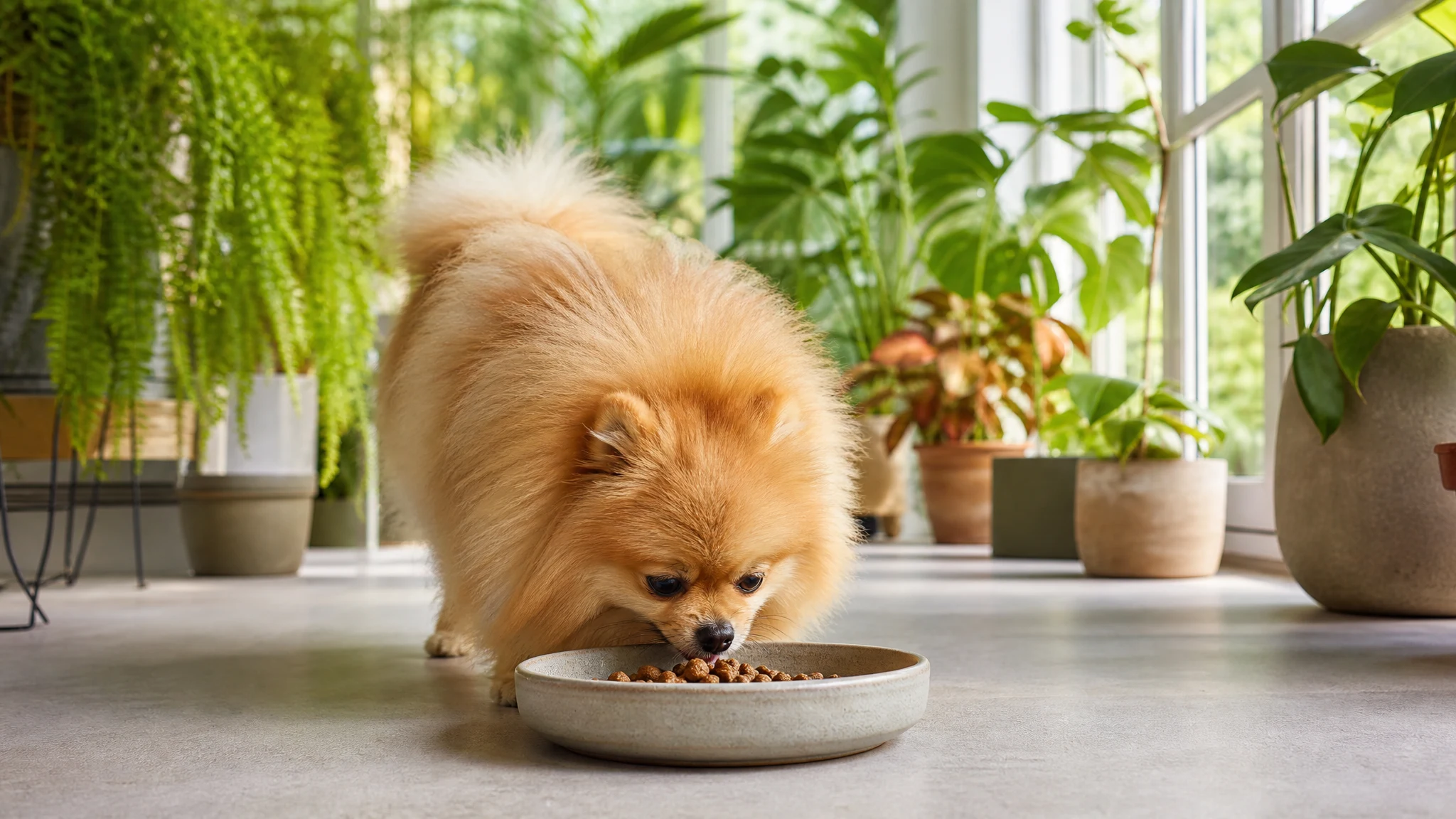
General nutrition information compiled from product labels and published sources, not veterinary advice. Your veterinarian is the right person to choose a diet for your dog, especially one with a health condition.
Pomeranians are tiny dogs, and that changes how you pick food. PetMD lists the adult weight at 3 to 7 pounds and the life expectancy at 12 to 16 years. A small body with a long life means every ounce of food and every treat counts.
This guide walks through a plain process for choosing for health dog food, meaning a diet that covers what a Pomeranian needs from puppyhood to the senior years. It is a label-reading method, not a ranking. We compared label data published by the brands. We did not run feeding trials or taste tests, and we are not saying any food is best.
What you need before you start
- Your dog's current weight and age, written down
- The bag, can or tray of any food you are considering, or its brand product page
- A measuring cup, and ideally a kitchen scale that reads in grams
- A notebook or phone note for calories, treats and body changes
- Your veterinarian's contact details for questions about your individual dog
Step 1: Know what a Pomeranian's diet has to cover
Start with the breed, not the marketing. The sources we relied on point to a few diet-related themes.
- Steady meals. PetMD notes the breed has a higher than average risk of hypoglycemia (low blood sugar), especially in puppies. It recommends a high-quality food that meets AAFCO standards and frequent meals.
- Calorie control. PetMD advises that treats, chews and toppers count toward daily calories, to help avoid obesity.
- Mouth care. PetMD lists dental disease among the breed's health problems. The site pomeranian.org says ignored tooth problems quickly cause major trouble.
- Healthy weight. PetMD also lists collapsing trachea among the breed's health problems. Diet does not cause it, but weight management is part of the conversation with your vet.
No food prevents or treats any of these. Food is one piece of care, and a veterinarian decides what is right for an individual dog. For more on how these factors fit together, see Pomeranian nutrition and the diet factors that matter.
Step 2: Find the AAFCO statement
Turn the package over and look for a sentence that starts with something like "formulated to meet the nutritional levels established by the AAFCO Dog Food Nutrient Profiles." Then check which life stage it names:
- Maintenance (adult): for adult dogs only.
- Growth: for puppies.
- All life stages: covers puppies and adults.
Some statements add "except for growth of large size dogs (70 lb. or more as an adult)." That exception does not matter for a Pomeranian, which is far below that size. PetMD says to feed adult food to dogs at least 1 year old. Some brands set their own cutoff. Royal Canin's X-Small adult line, for example, is listed for dogs from 10 months. Check the brand and ask your vet when to switch.
Step 3: Read the label data side by side
Next, compare what the labels actually say. Here are a few foods, using only the figures on the brands' own pages. These are examples, not recommendations.
| Food | Life stage on label | Protein / fat / fiber | Calories |
|---|---|---|---|
| Royal Canin Breed Health Nutrition Pomeranian Adult (dry) | Adult maintenance | 24% min / 14% min / 3.6% max | 352 kcal per cup (calculated) |
| VICTOR Hi-Pro Plus Small Breed Adult (dry) | All life stages, except large-size growth | 30% min / 14% min / 5% max | 360 kcal per cup |
| Hill's Science Diet Adult Small & Mini Chicken & Brown Rice (dry) | Adult maintenance | Dry matter averages only: about 25% protein, 15.3% fat, 1.5% fiber | 357 kcal per cup |
| Freshpet Small Dog Bite Size Chicken Recipe (fresh) | All life stages, except large-size growth | 16% min / 12% min / 1.5% max | 267 kcal per cup (calculated) |
Two cautions when reading this table. First, Hill's lists dry matter averages, not guaranteed minimums, and fresh food contains much more moisture. Percentages from different formats are not directly comparable. Second, ingredient lists tell you what a food is made of, not whether it suits your dog. Royal Canin's Pomeranian formula lists brewers rice, corn and chicken by-product meal first, while VICTOR lists beef and chicken meal first. Neither list is a verdict on its own.
For product details, go to the brand pages: Royal Canin Pomeranian Adult, VICTOR Hi-Pro Plus Small Breed Adult, Hill's Science Diet Adult Small & Mini and Freshpet Small Dog Bite Size Chicken Recipe. Kibble size is listed as unknown on several of these pages, so check with the brand if bite size matters for your dog's mouth.
Step 4: Use the feeding guide as a starting point
Every label includes a feeding chart. Treat it as a starting point and adjust with your vet. Some examples from the brands' own pages:
- Royal Canin lists 1/4 cup (24 g) per day for a 2.2 lb dog with low activity.
- VICTOR lists 0.5 cup per day for a 5 lb dog, using a standard 8 oz measuring cup.
- Hill's Adult 7+ Small & Mini lists 1/4 cup for a 2 lb dog, and tells owners to adjust to maintain optimal weight and ask a veterinarian if unsure.
Notice how the calorie figures above differ. A cup of one food is not the same as a cup of another. When you switch products, recalculate the amount rather than swapping cup for cup. A gram scale is more consistent than a scoop, especially when daily portions are this small.
Step 5: Set a meal schedule
PetMD says puppies get multiple meals a day, and adults and seniors get two to three. Because of the breed's hypoglycemia risk, many owners keep meals regular rather than leaving long gaps. The pomeranian.org site says most puppy hypoglycemia cases come from insufficient or low-quality food. If your puppy seems weak, shaky or unusually sleepy, call your veterinarian promptly rather than adjusting food on your own.
Step 6: Count treats and extras
Write down every treat, chew and topper for a week. PetMD says these count toward daily calories. On a dog that eats a quarter cup of food, a few extra treats can be a meaningful share of the day. Many owners shave a little off the meal portion when treats are heavy, after checking with their vet.
Step 7: Think about the DCM headlines calmly
You may see worry about grain-free diets and heart disease. The FDA's investigation into a possible link between certain diets and canine dilated cardiomyopathy (DCM) has a latest update dated December 23, 2022. The FDA says it does not plan more public updates until there is meaningful new scientific information. The investigation concerned grain-free diets high in peas, lentils or potatoes. The FDA page is the place to read the details. If your dog eats a grain-free or boutique diet, ask your veterinarian whether it makes sense to keep it.
Step 8: Change foods slowly and watch your dog
When you pick a new food, mix it in gradually with the old one over several days, and ask your vet or the brand for a schedule. Then track appetite, stool, energy and body shape. Weigh your dog at home or at the clinic on a regular schedule. Small dogs show weight changes in ounces, so a small number on the scale can matter.
Tips
- Compare calories per cup before comparing price or ingredients.
- Choose a life stage that matches your dog. Puppy, adult and senior labels differ.
- Take the label with you to the vet visit.
- Fresh and frozen foods are covered by the same AAFCO wording. Check the product page for the life stage it names.
- Some fresh foods, such as Nom Nom Chicken Cuisine and JustFoodForDogs Chicken & White Rice, state no small breed formula. Ask the brand how to portion them for a dog under 10 pounds.
Common mistakes to avoid
- Feeding by the cup without checking calories. Foods vary a lot in calories per cup.
- Using a puppy food too long. Puppy foods are more calorie dense. For example, Hill's Puppy Small & Mini lists 418 kcal per cup.
- Picking a size line without checking the range. Royal Canin's Small Puppy is listed for expected adult weights of 9 to 22 lb, above a typical Pomeranian's, so ask your vet whether an X-Small line fits better.
- Treating the label as a promise of results. A food label describes nutrients, not outcomes.
- Adding supplements or switching to a prescription diet on your own. Prescription diets are only something a veterinarian prescribes.
- Ignoring the mouth. Diet is only one part of dental care. Ask your vet about checkups.
What results to expect
A complete, appropriately portioned diet may help support steady energy, a healthy body weight and normal digestion. It cannot promise any particular outcome, and it does not replace veterinary care. If your Pomeranian has loose stools, itching, weight change or low energy after a switch, contact your veterinarian. Your vet can tell you whether food is involved.
Sources
- PetMD, Pomeranian breed page
- pomeranian.org, Pomeranian health information
- FDA CVM, Investigation into Potential Link between Certain Diets and Canine Dilated Cardiomyopathy
- Royal Canin, Pomeranian Adult product page
- Royal Canin, Small Puppy product page
- Hill's Pet, Science Diet Adult Small & Mini
- Hill's Pet, Science Diet Adult 7+ Small & Mini
- Hill's Pet, Science Diet Puppy Small & Mini
- VICTOR Pet Food, Hi-Pro Plus Small Breed Adult
- Freshpet, Small Dog Bite Size Chicken Recipe
- Nom Nom, Chicken Cuisine
- JustFoodForDogs, Chicken & White Rice Recipe